 Slaidy.com
- The evolution of media effects theory

Содержание
- 2. I. Persuasion Theories (1944–1963) 1. Voting research (Lazarsfeld, Berelson, & Gaudet, 1944; Campbell et al., 1960);
- 3. II. Active Audience Theories (1944–1986) 6. Attribution theory (Heider, 1958; Kelley, 1967); 7. Uses & gratifications
- 4. III. Active Audience Theories (1944–1986) 12. Disposition theory (Zillmann & Cantor, 1976); 13. Media dependency (Ball-Rokeach
- 5. IV. Social Context Theories (1955–1983) 15. Two-step flow (Katz & Lazarsfeld, 1955); 16. Diffusion theory (Rogers,
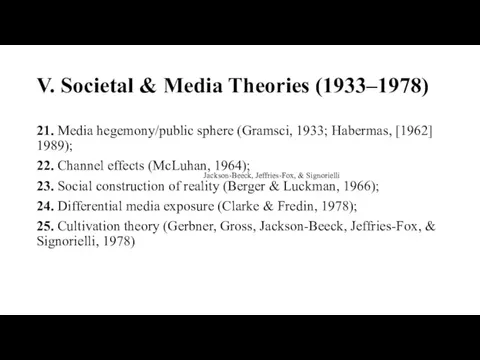
- 6. V. Societal & Media Theories (1933–1978) 21. Media hegemony/public sphere (Gramsci, 1933; Habermas, [1962] 1989); 22.
- 8. Скачать презентацию
Слайд 2I. Persuasion Theories (1944–1963)
1. Voting research (Lazarsfeld, Berelson, & Gaudet, 1944; Campbell
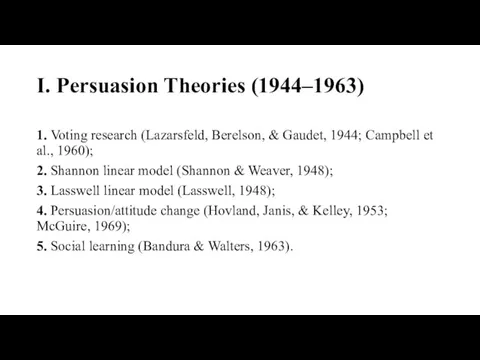
I. Persuasion Theories (1944–1963)
1. Voting research (Lazarsfeld, Berelson, & Gaudet, 1944; Campbell
Слайд 3II. Active Audience Theories (1944–1986)
6. Attribution theory (Heider, 1958; Kelley, 1967);
7. Uses
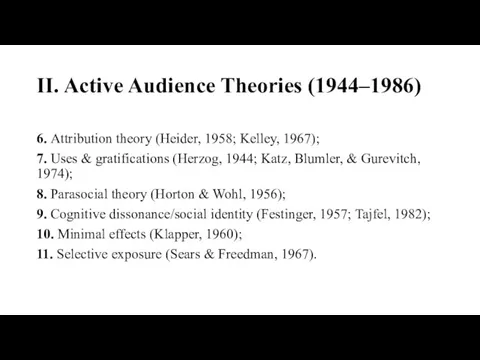
II. Active Audience Theories (1944–1986)
6. Attribution theory (Heider, 1958; Kelley, 1967);
7. Uses
Слайд 4III. Active Audience Theories (1944–1986)
12. Disposition theory (Zillmann & Cantor, 1976);
13. Media
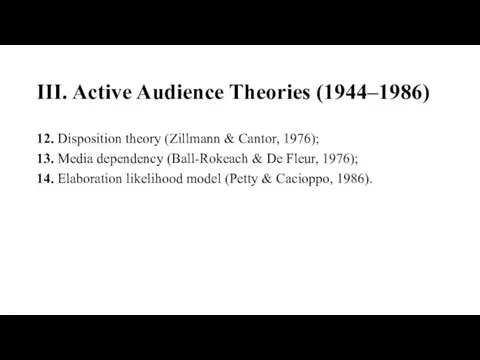
III. Active Audience Theories (1944–1986)
12. Disposition theory (Zillmann & Cantor, 1976);
13. Media
Слайд 5IV. Social Context Theories (1955–1983)
15. Two-step flow (Katz & Lazarsfeld, 1955);
16. Diffusion
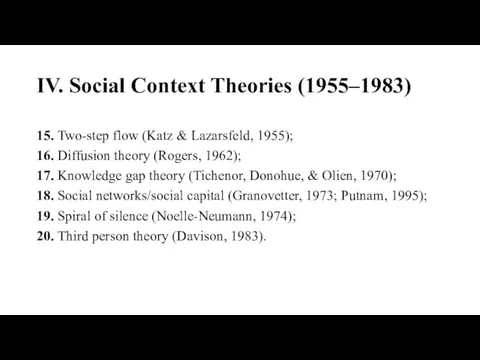
IV. Social Context Theories (1955–1983)
15. Two-step flow (Katz & Lazarsfeld, 1955);
16. Diffusion
Слайд 6V. Societal & Media Theories (1933–1978)
21. Media hegemony/public sphere (Gramsci, 1933; Habermas,
V. Societal & Media Theories (1933–1978)
21. Media hegemony/public sphere (Gramsci, 1933; Habermas,
 Группа Indefinite
 Verbs - глаголы
 What's the time? 3 классы
 Apocalyptic talks
 Lake Baikal
 Christmas. Mission possible
 Ladybug food
 In the house
 Английский вокруг нас
 Five Little Hearts
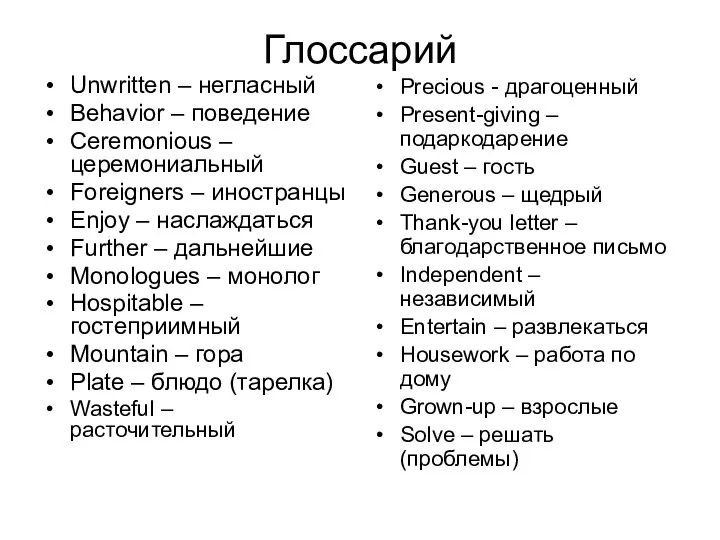 Глоссарий (8 класс)
 Why? Maybe you can say?
 Present progressive, continuous
 Seasons and actions
 Rhyme
Rhyme Easter dobble eggs. Game
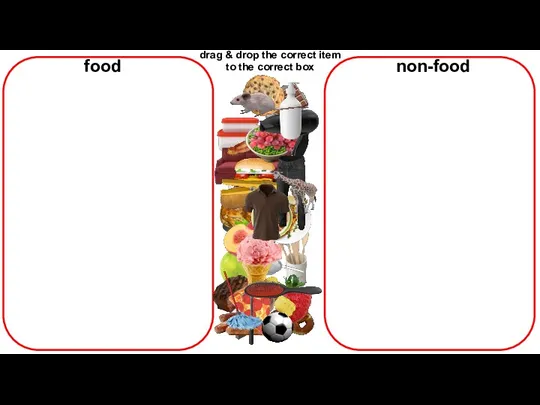 Food, non-food
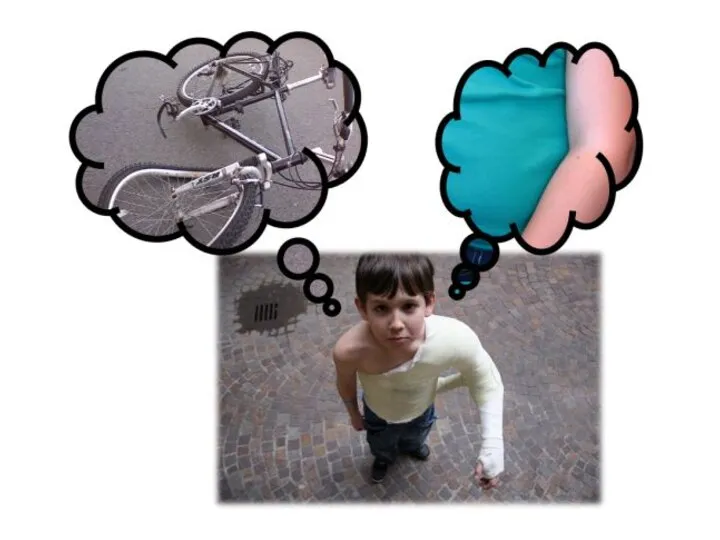 Conditionals speaking practice
 Презентация на тему Неправильные глаголы - Irregular Verbs
 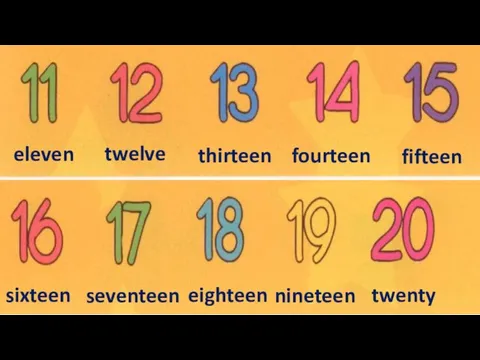 Eleven. Twelve
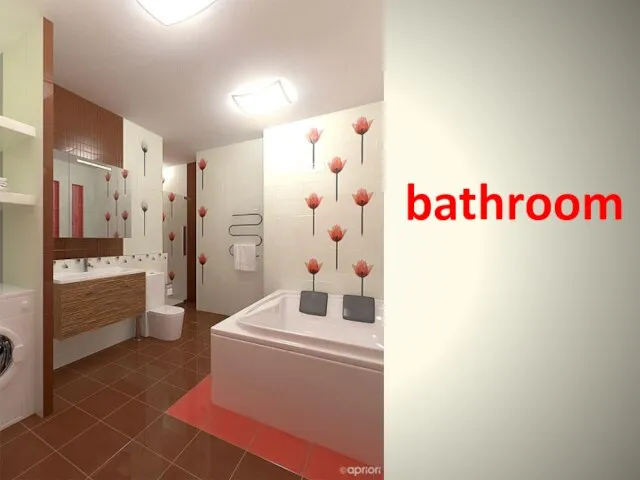 In the bath
 Презентация на тему AMERICAN UNIVERSITIES (АМЕРИКАНСКИЕ УНИВЕРСИТЕТЫ)
  Правила употребления артикля с гео­графическими названиями. Уроки от Миссис Марпл
 Present simple
 Употребление too и enough
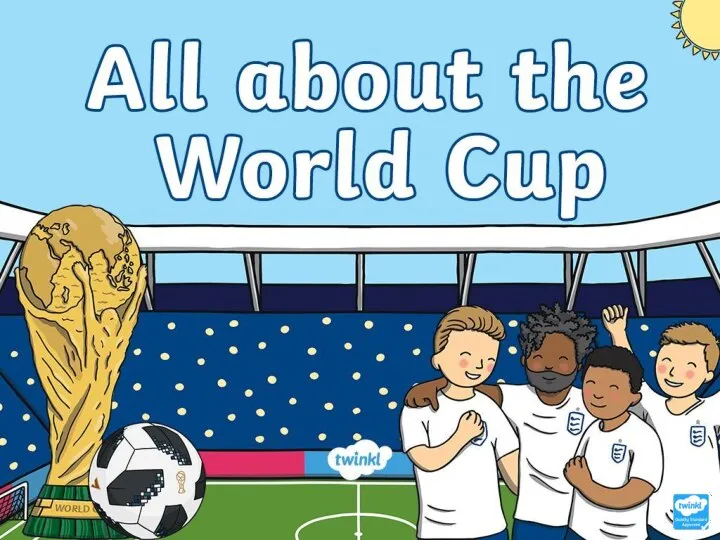 All about the world cup
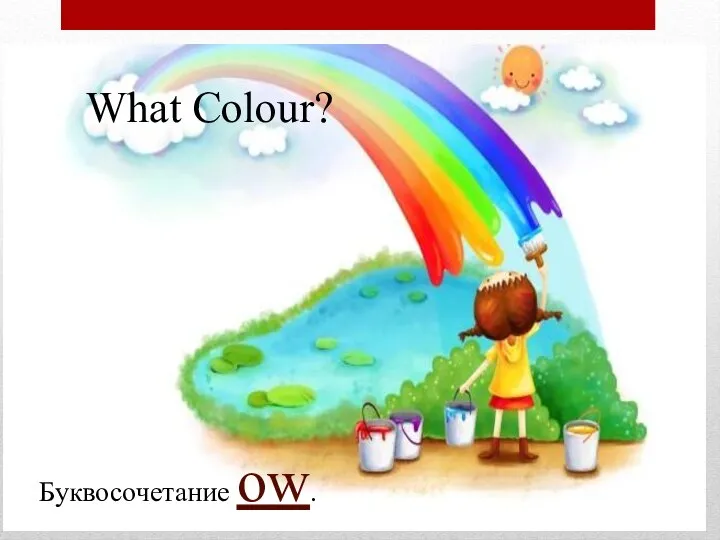 Буквосочетание ow
 Jeopardy. Time