 Slaidy.com
- Basics 01. Grundlagen Englisch - Present simple - Present continuous - time expressions

Содержание
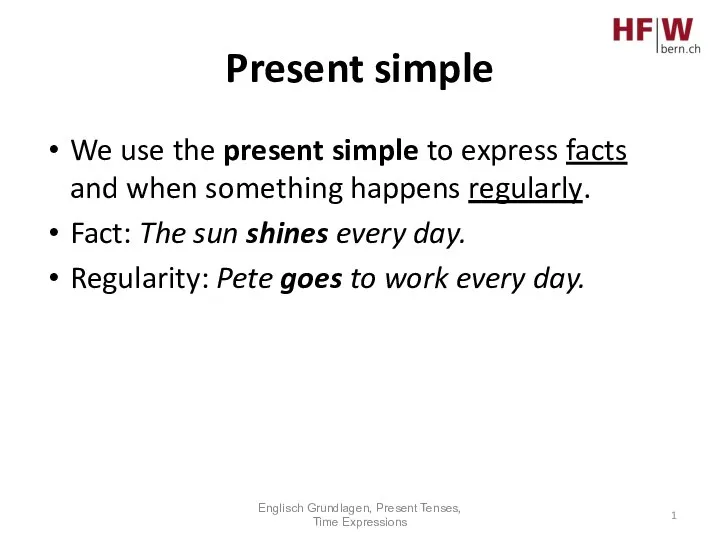
- 2. Present simple We use the present simple to express facts and when something happens regularly. Fact:
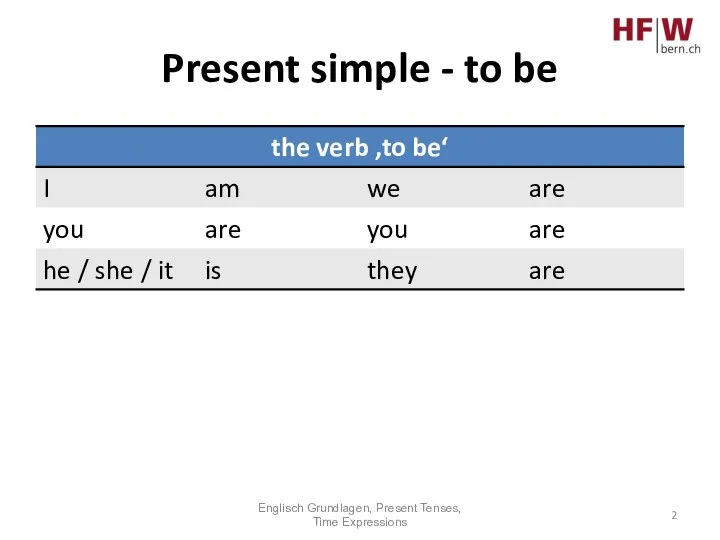
- 3. Present simple - to be Englisch Grundlagen, Present Tenses, Time Expressions
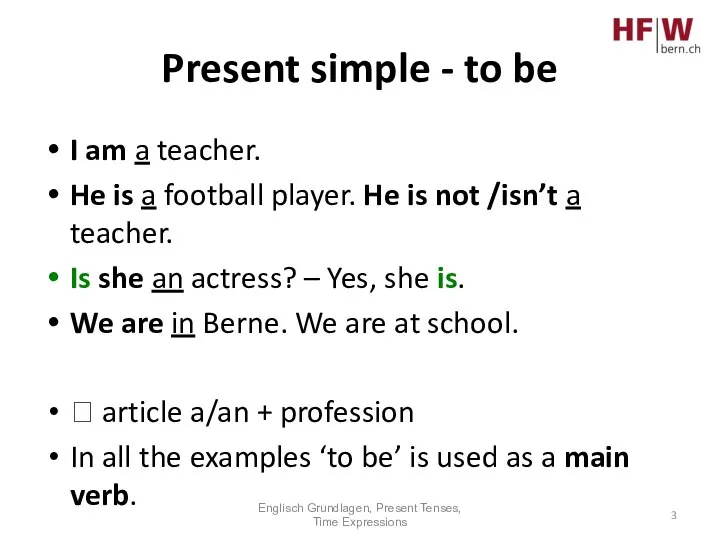
- 4. Present simple - to be I am a teacher. He is a football player. He is
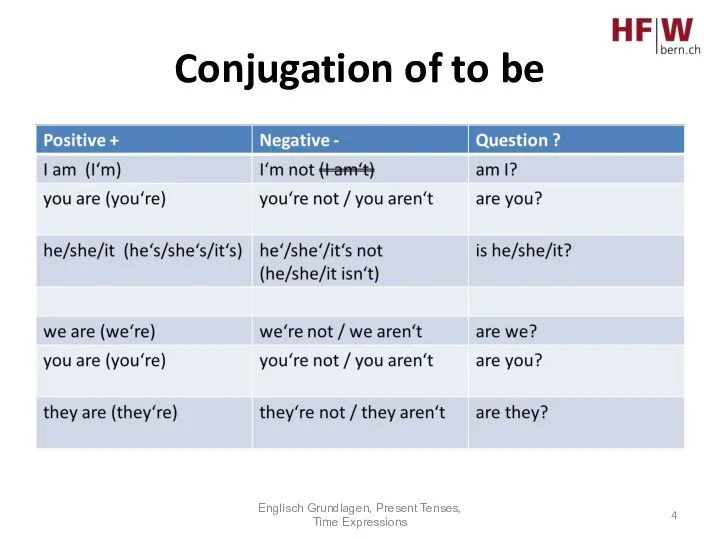
- 5. Conjugation of to be Englisch Grundlagen, Present Tenses, Time Expressions
- 6. Present simple - to do Englisch Grundlagen, Present Tenses, Time Expressions
- 7. Present simple - to do I do sports three times a week. You don‘t do your
- 8. Present simple - to have Examples: - I have a new computer. - She has a
- 9. Present simple - to play, to rest, to learn Englisch Grundlagen, Present Tenses, Time Expressions
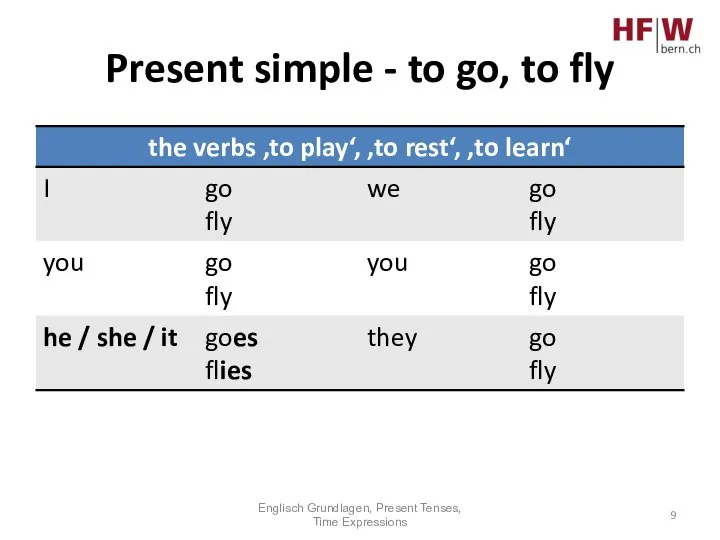
- 10. Present simple - to go, to fly Englisch Grundlagen, Present Tenses, Time Expressions
- 11. Present simple – your turn! practice alone or in pairs Grammar Book, Unit 1 (p10) Murphy
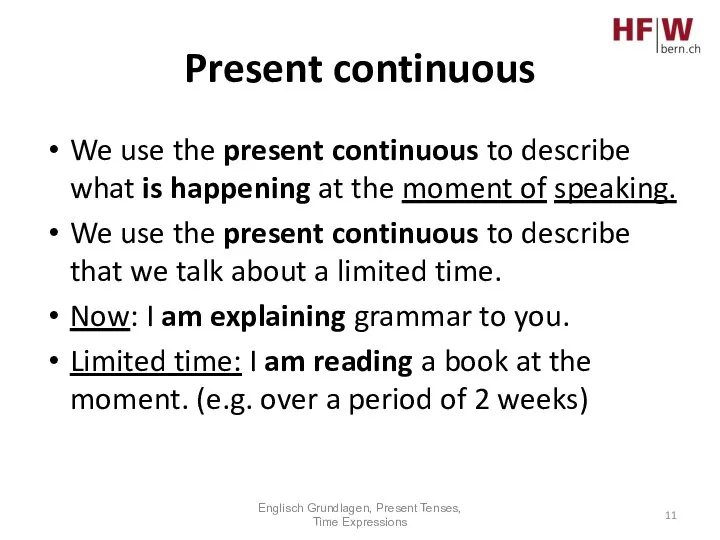
- 12. Present continuous We use the present continuous to describe what is happening at the moment of
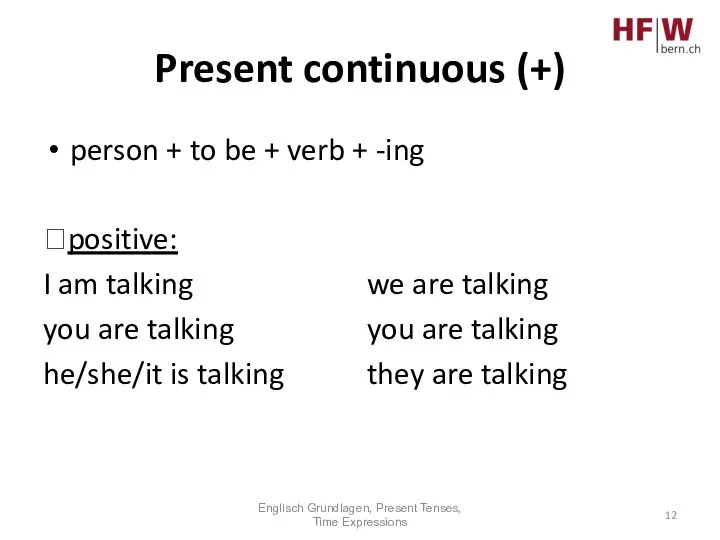
- 13. Present continuous (+) person + to be + verb + -ing ?positive: I am talking we
- 14. Present continuous (-) person + to be + not + verb + -ing ?negative: I am
- 15. Present continuous (?) to be + person + verb + -ing +? ?positive: am I talking?
- 16. Present continuous (O) Rechtschreibung Achtung zum Beispiel bei: stop ? stopping come ? coming fly ?
- 18. Скачать презентацию
Слайд 3Present simple - to be
Englisch Grundlagen, Present Tenses, Time Expressions
Present simple - to be
Englisch Grundlagen, Present Tenses, Time Expressions
Слайд 4Present simple - to be
I am a teacher.
He is a football player.
Present simple - to be
I am a teacher.
He is a football player.
Слайд 5Conjugation of to be
Englisch Grundlagen, Present Tenses, Time Expressions
Conjugation of to be
Englisch Grundlagen, Present Tenses, Time Expressions
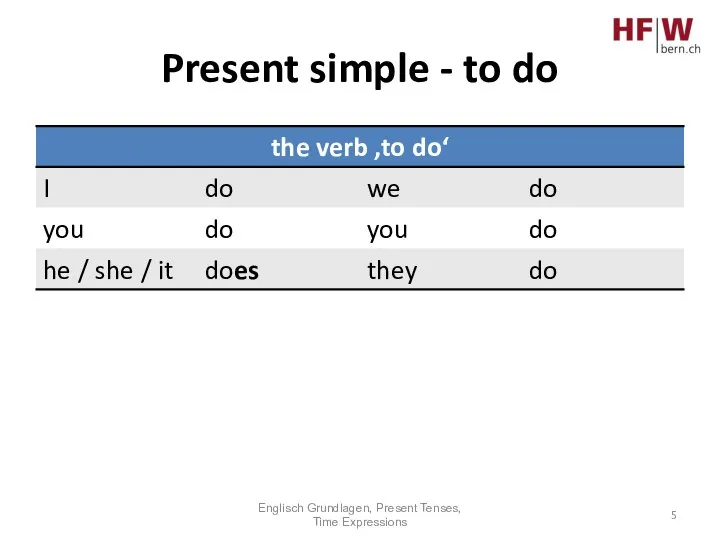
Слайд 6Present simple - to do
Englisch Grundlagen, Present Tenses, Time Expressions
Present simple - to do
Englisch Grundlagen, Present Tenses, Time Expressions
Слайд 7Present simple - to do
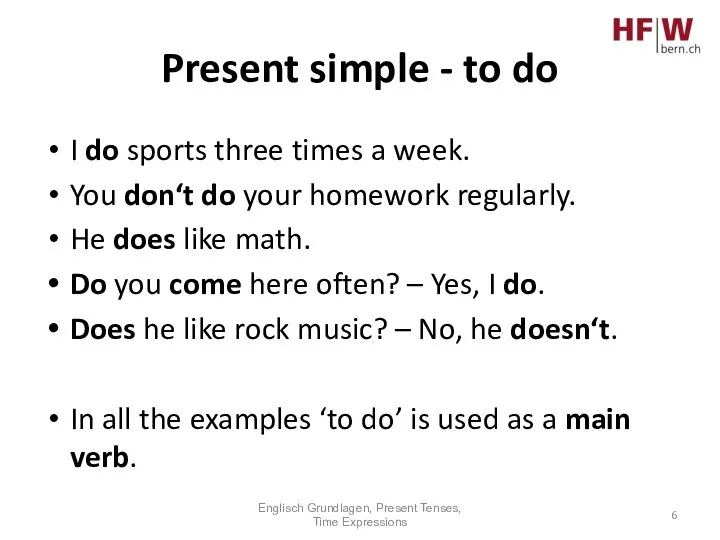
I do sports three times a week.
You don‘t
Present simple - to do
I do sports three times a week.
You don‘t
Слайд 8Present simple - to have
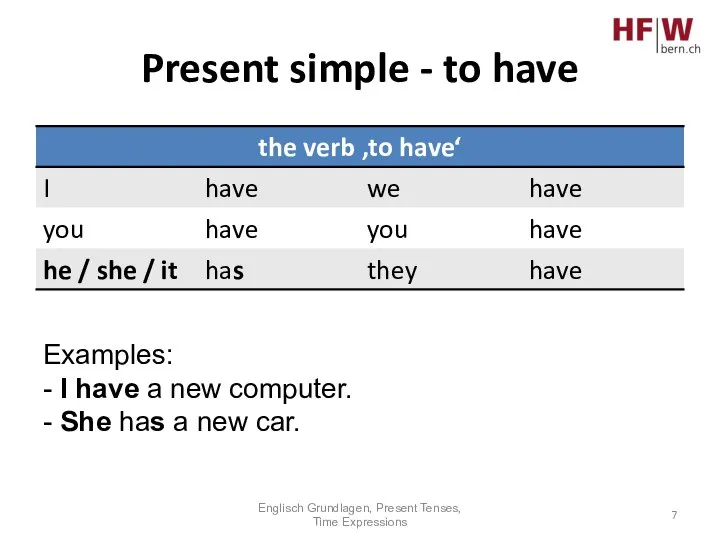
Examples:
- I have a new computer.
- She has
Present simple - to have
Examples:
- I have a new computer.
- She has
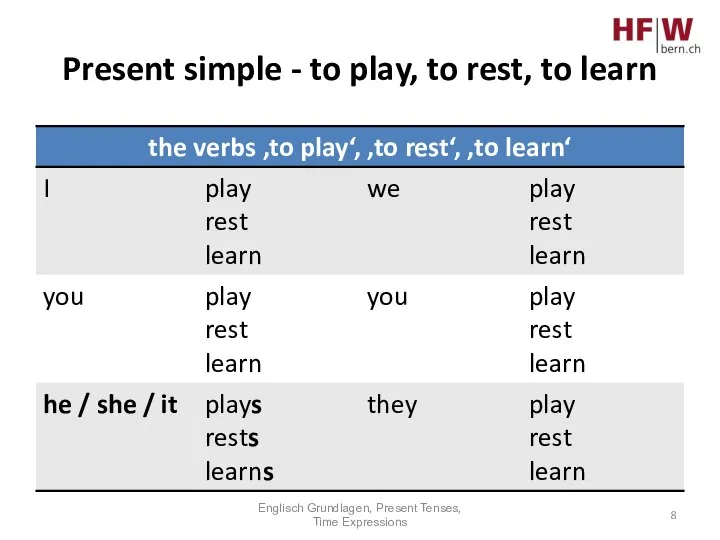
Слайд 9Present simple - to play, to rest, to learn
Englisch Grundlagen, Present Tenses,
Present simple - to play, to rest, to learn
Englisch Grundlagen, Present Tenses,
Слайд 10Present simple - to go, to fly
Englisch Grundlagen, Present Tenses, Time Expressions
Present simple - to go, to fly
Englisch Grundlagen, Present Tenses, Time Expressions
Слайд 11Present simple – your turn!
practice alone or in pairs
Grammar Book, Unit 1
Present simple – your turn!
practice alone or in pairs
Grammar Book, Unit 1
Слайд 12Present continuous
We use the present continuous to describe what is happening at
Present continuous
We use the present continuous to describe what is happening at
Слайд 13Present continuous (+)
person + to be + verb + -ing
?positive:
I am talking we
Present continuous (+)
person + to be + verb + -ing
?positive:
I am talking we
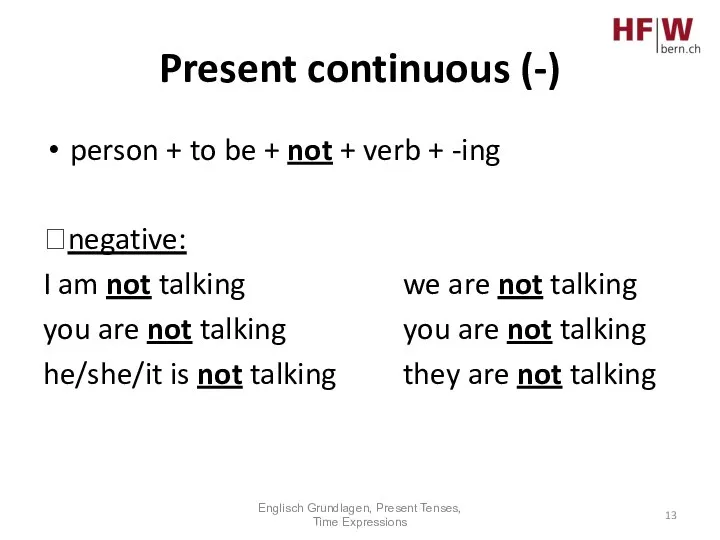
Слайд 14Present continuous (-)
person + to be + not + verb + -ing
?negative:
I
Present continuous (-)
person + to be + not + verb + -ing
?negative:
I
Слайд 15Present continuous (?)
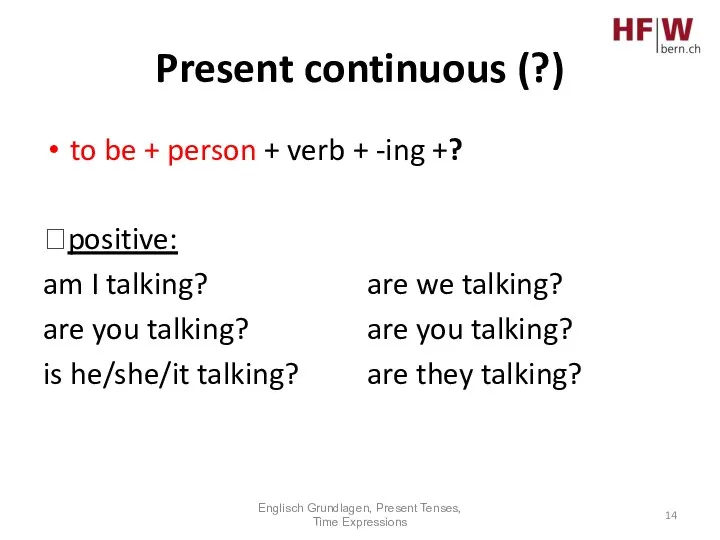
to be + person + verb + -ing +?
?positive:
am I
Present continuous (?)
to be + person + verb + -ing +?
?positive:
am I
Слайд 16Present continuous (O)
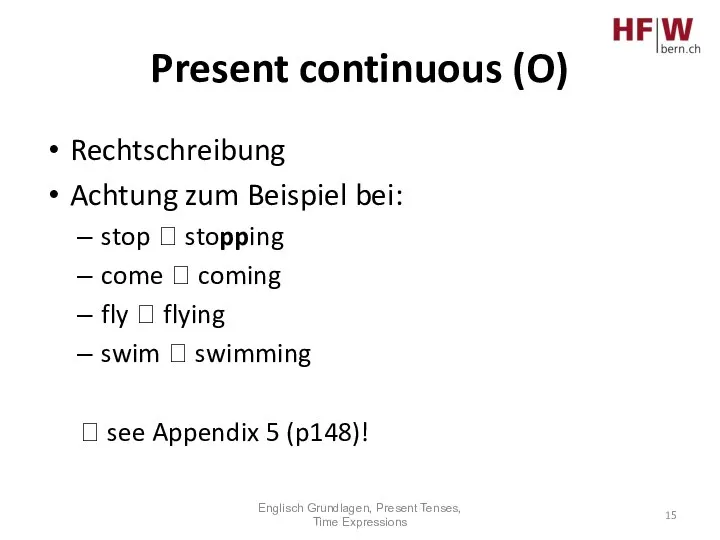
Rechtschreibung
Achtung zum Beispiel bei:
stop ? stopping
come ? coming
fly ? flying
swim
Present continuous (O)
Rechtschreibung
Achtung zum Beispiel bei:
stop ? stopping
come ? coming
fly ? flying
swim
 Let’s read
 Lesson - актированный день
 GoGetter2. Events + be going to + dates (Unit 8)
 The famous travelers. Main subordinate conjunctions
 Step 3
 The Article
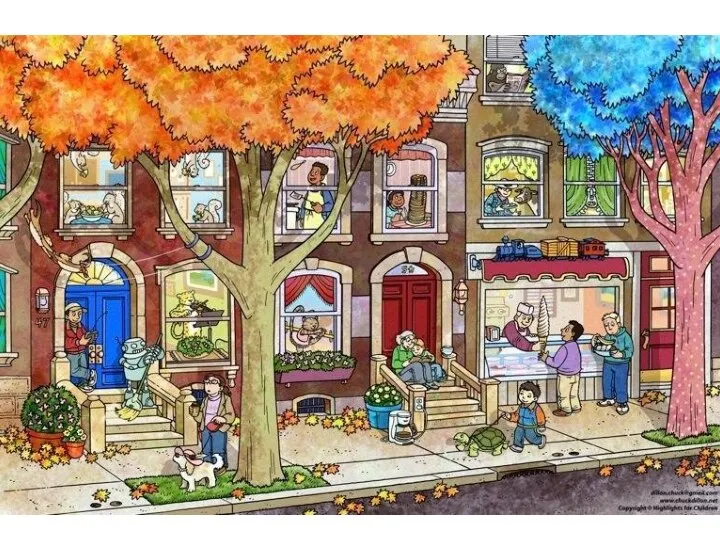 Continuous
 Презентация про Германию
 Ground. Floor. Directions. First floor. Across. Test
 Sequence of Tenses
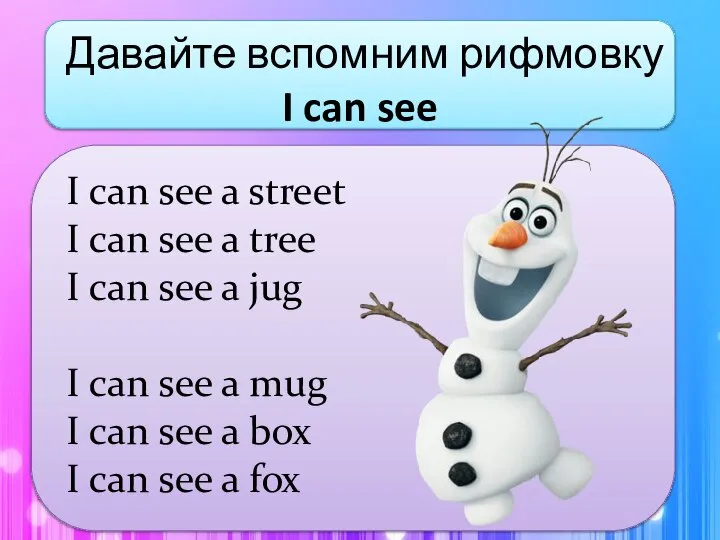 I can see
 What can you do
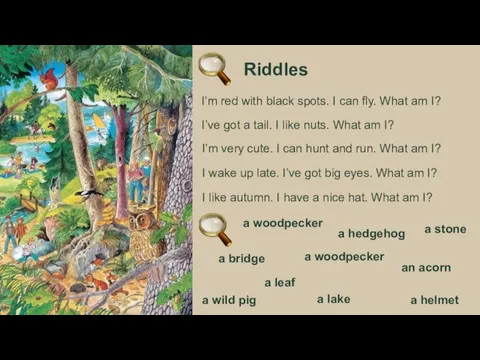 Forest Riddles
 English is fun to learn
 Презентация на тему Welcome the United Kingdom of Great Britain and Northern Ireland
  Mystery Animals
 The Big Whee 1. Игра-карусель 7 кл
 3 группы глаголов. 9 класс
 Verbs
Verbs Unit 2, BP 4/ A
 Training simulator 14
 Глоссарий (8 класс)
 About myself. Konstantin Teryokhin
 Macroeconomics
 At the shop. Packings of products
 Ghost-busters
 Rhyming Words
 Шнобелевская премия Подготовили: студенты 2 курса, Т-1202 Токманова Сандира Прутова Оксана