 Slaidy.com
- Косвенная речь (1 часть) — Indirect (reported) speech

Содержание
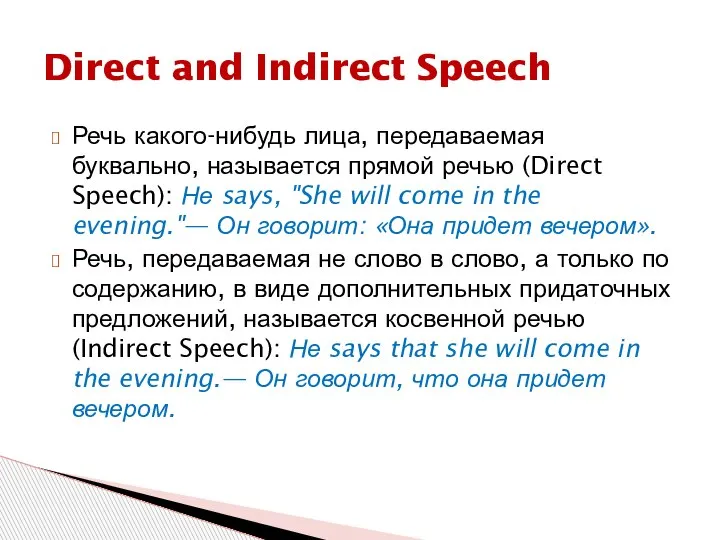
- 2. Речь какого-нибудь лица, передаваемая буквально, называется прямой речью (Direct Speech): Не says, "She will come in
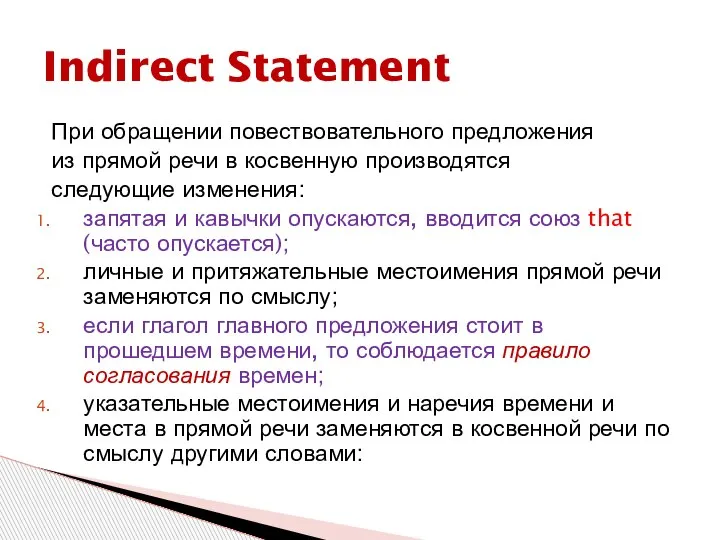
- 3. При обращении повествовательного предложения из прямой речи в косвенную производятся следующие изменения: запятая и кавычки опускаются,
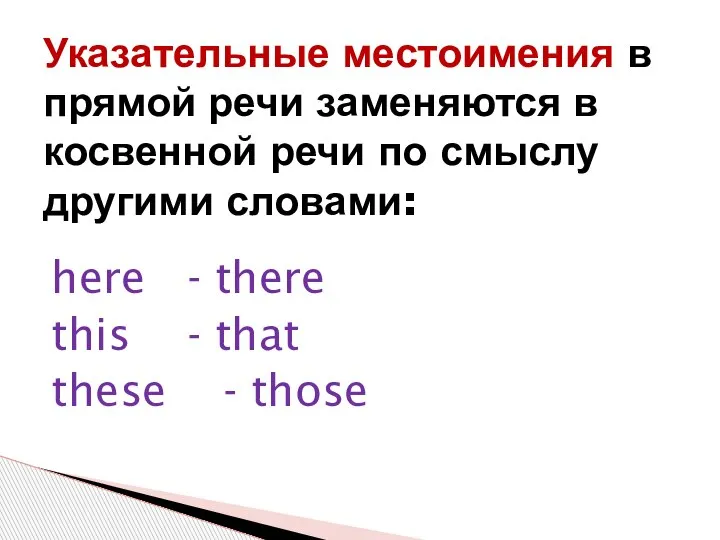
- 4. here - there this - that these - those Указательные местоимения в прямой речи заменяются в
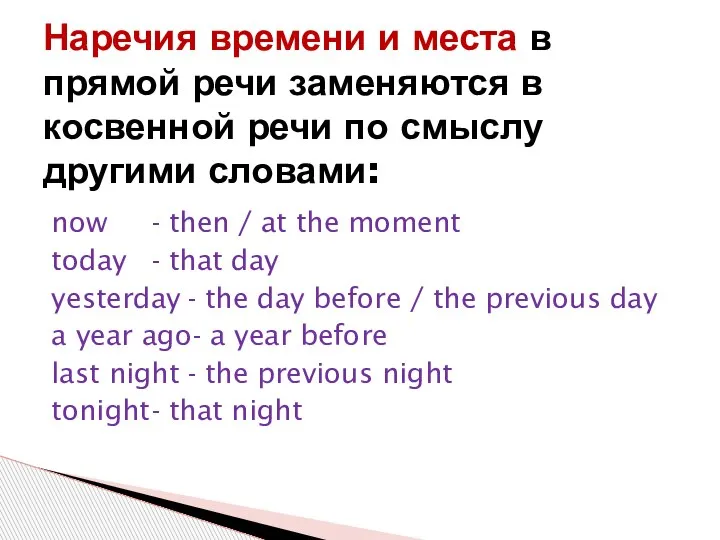
- 5. now - then / at the moment today - that day yesterday - the day before
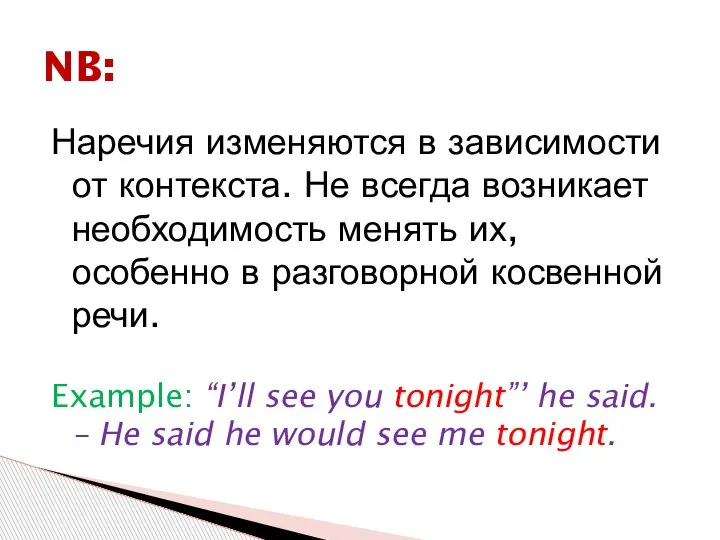
- 6. Наречия изменяются в зависимости от контекста. Не всегда возникает необходимость менять их, особенно в разговорной косвенной
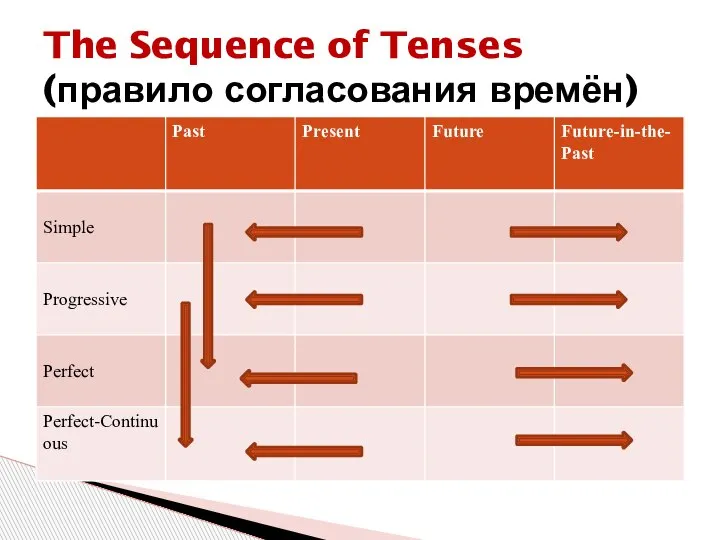
- 7. The Sequence of Tenses (правило согласования времён)
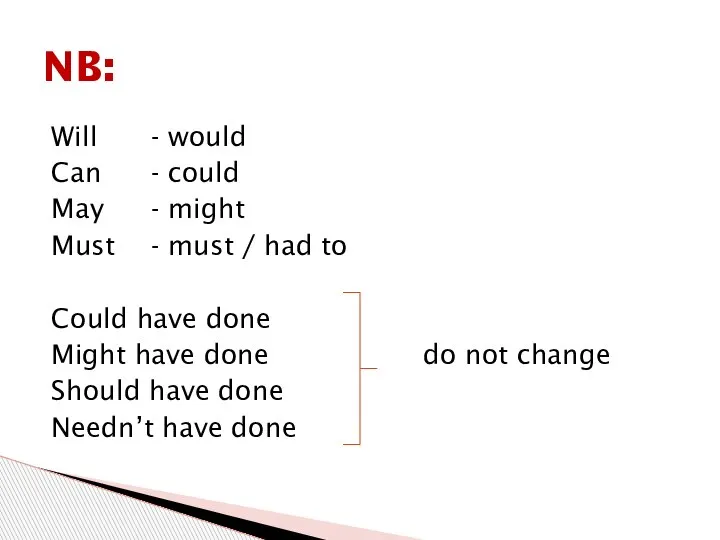
- 8. Will - would Can - could May - might Must - must / had to Could
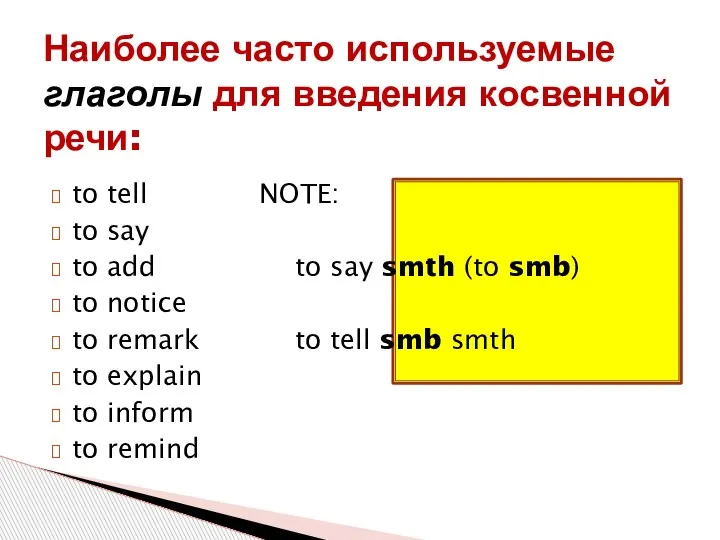
- 9. to tell NOTE: to say to add to say smth (to smb) to notice to remark
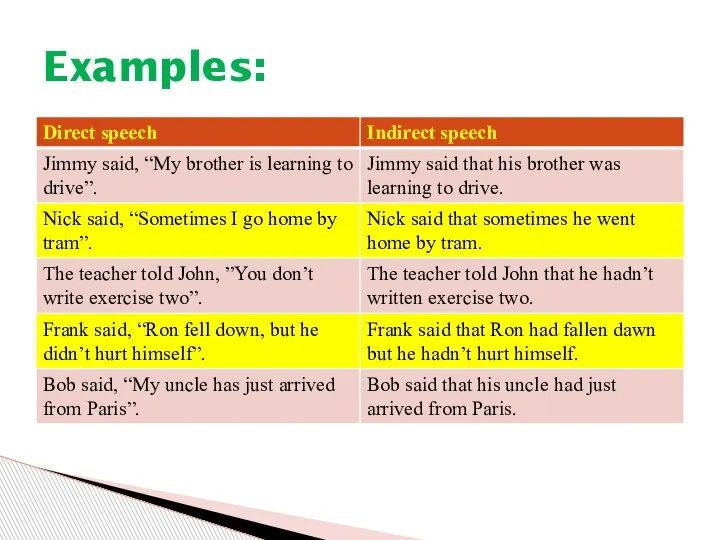
- 10. Examples:
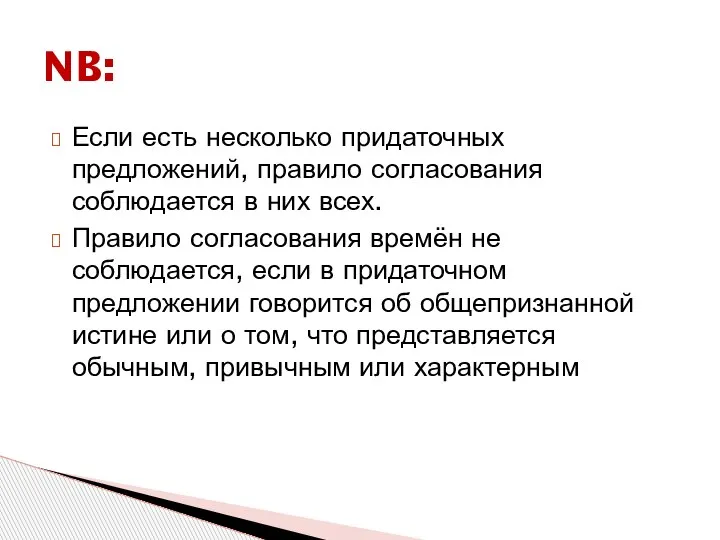
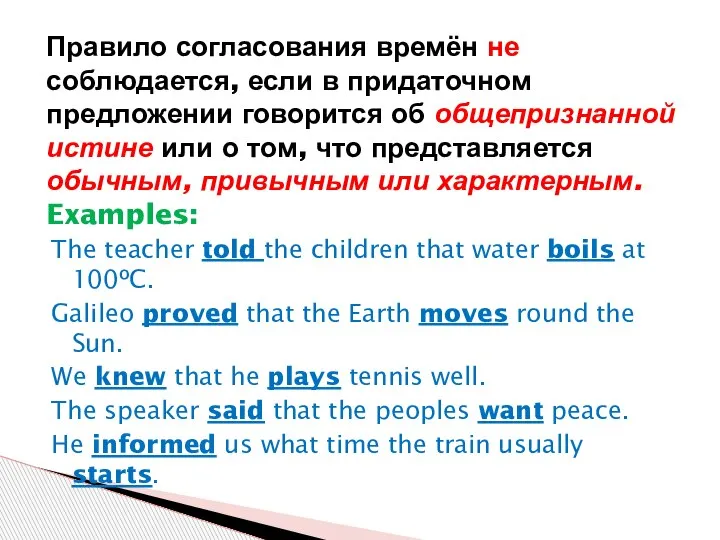
- 11. Если есть несколько придаточных предложений, правило согласования соблюдается в них всех. Правило согласования времён не соблюдается,
- 12. The teacher told the children that water boils at 100ºC. Galileo proved that the Earth moves
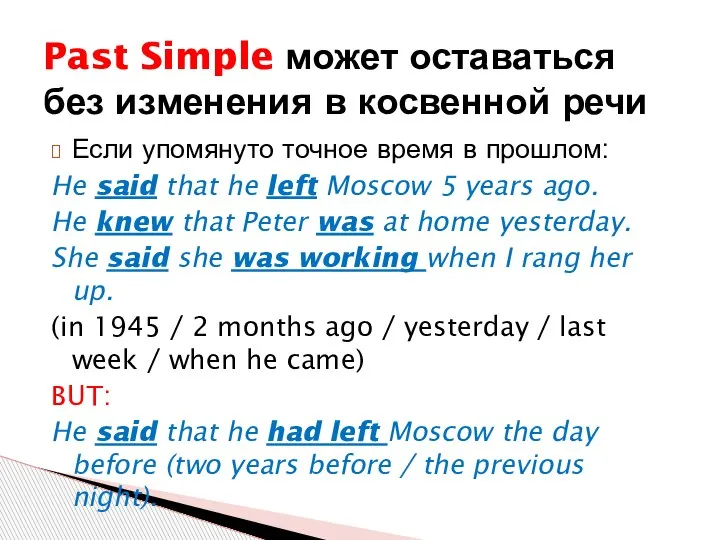
- 13. Если упомянуто точное время в прошлом: He said that he left Moscow 5 years ago. He
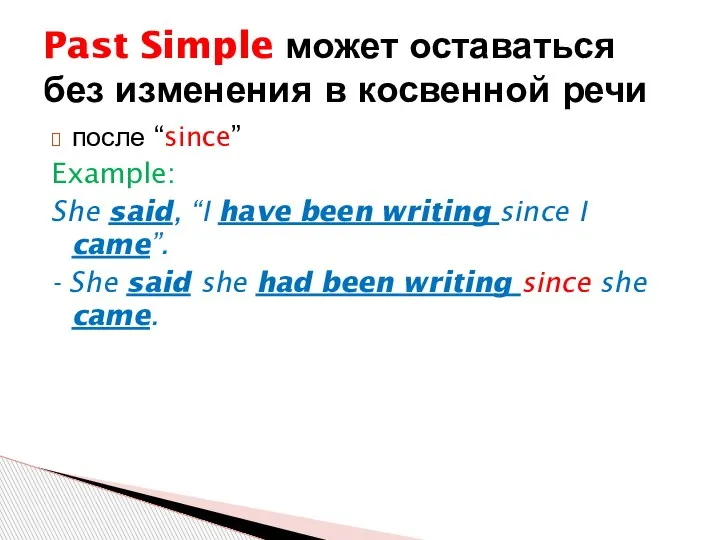
- 14. после “since” Example: She said, “I have been writing since I came”. - She said she
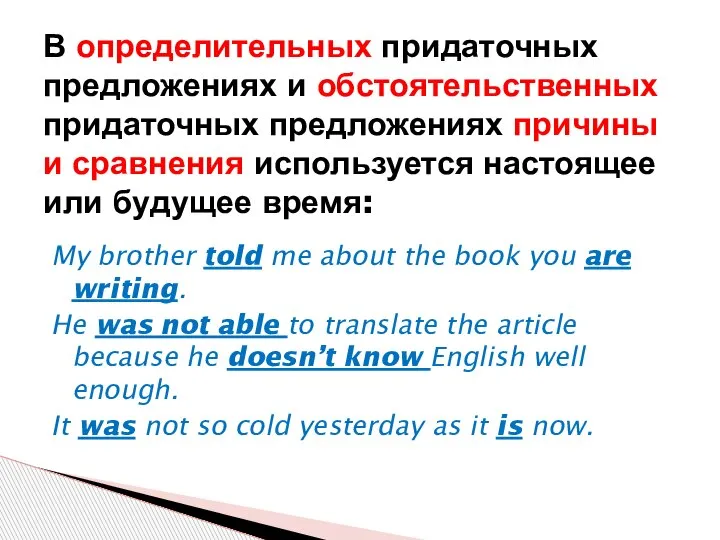
- 15. My brother told me about the book you are writing. He was not able to translate
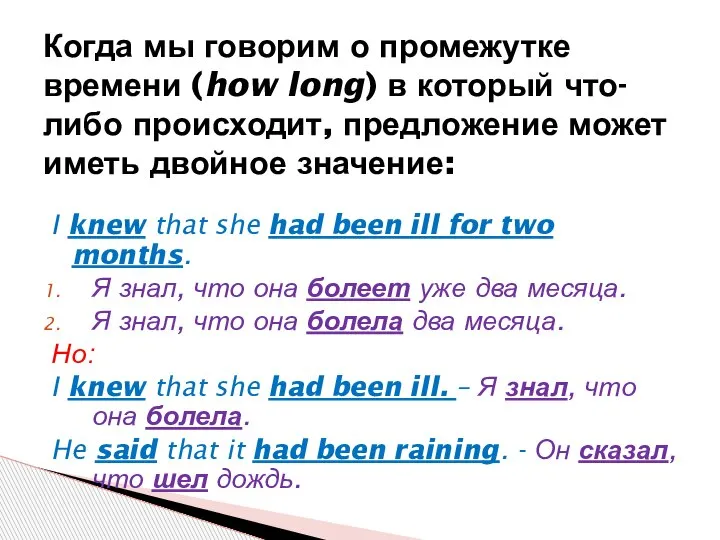
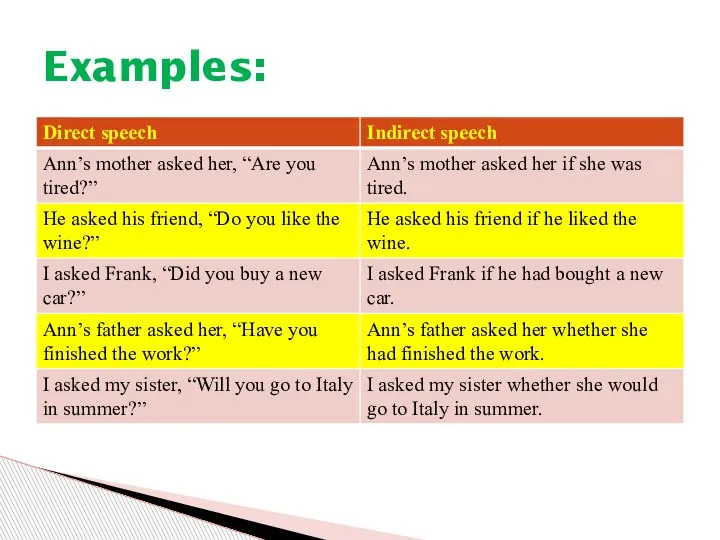
- 16. I knew that she had been ill for two months. Я знал, что она болеет уже
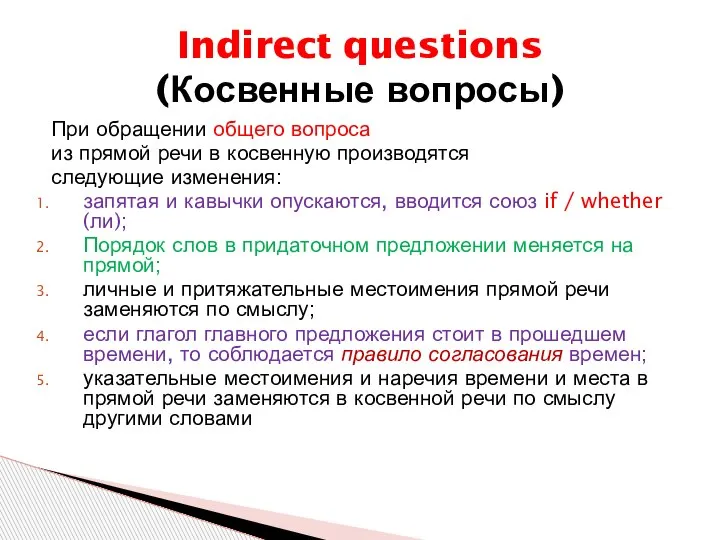
- 17. При обращении общего вопроса из прямой речи в косвенную производятся следующие изменения: запятая и кавычки опускаются,
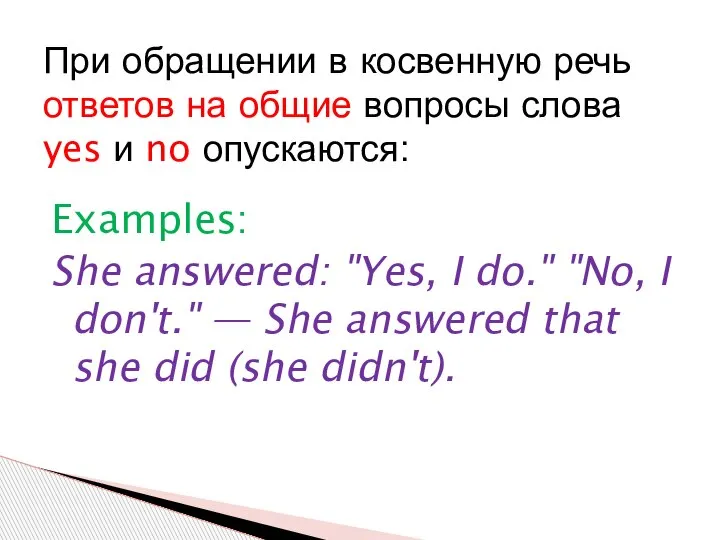
- 18. Examples:
- 19. Examples: She answered: "Yes, I do." "No, I don't." — She answered that she did (she
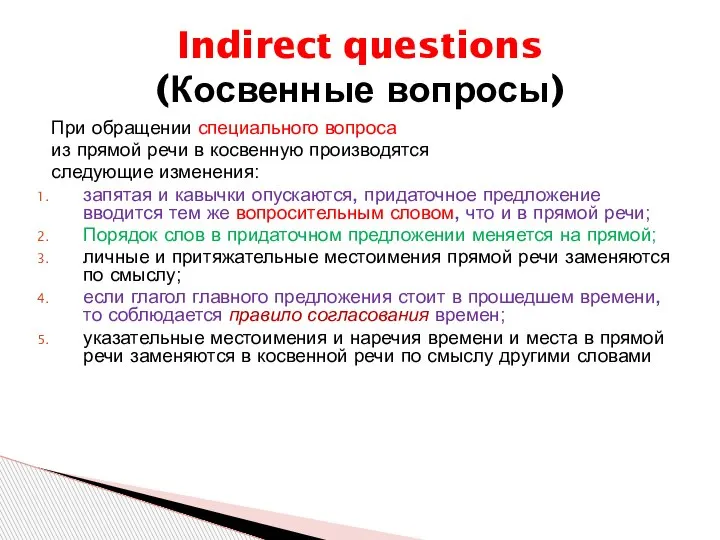
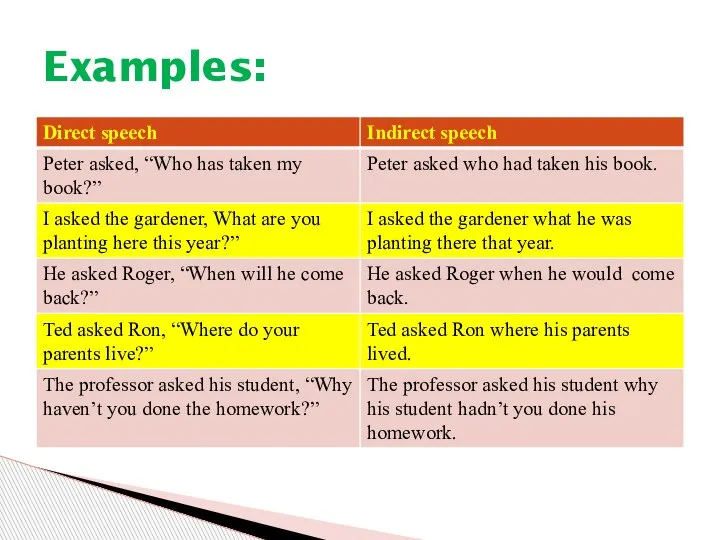
- 20. При обращении специального вопроса из прямой речи в косвенную производятся следующие изменения: запятая и кавычки опускаются,
- 21. Examples:
- 22. При переводе повелительного наклонения из прямой речи в косвенную используется неопределённая форма глагола (the Infinitive). Наиболее
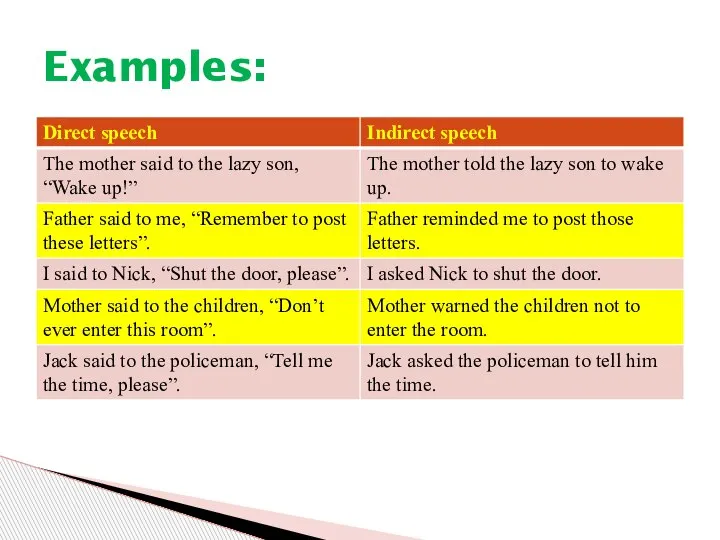
- 23. Examples:
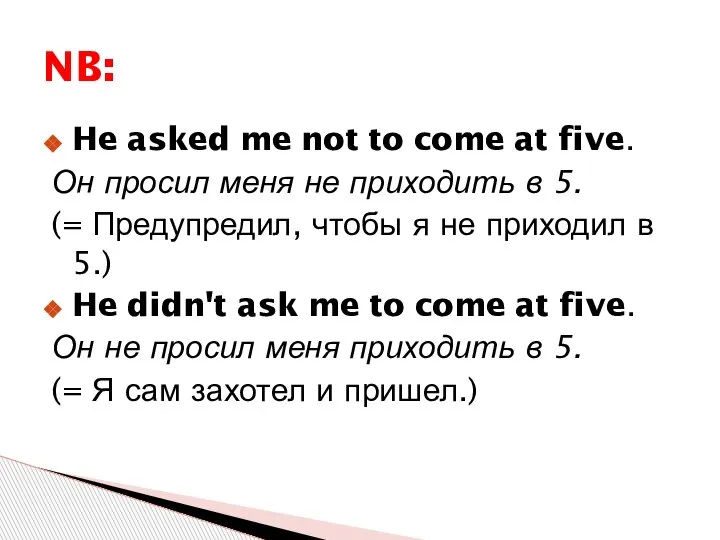
- 24. He asked me not to come at five. Он просил меня не приходить в 5. (=
- 26. Скачать презентацию
Слайд 2Речь какого-нибудь лица, передаваемая буквально, называется прямой речью (Direct Speech): Не says,
Речь какого-нибудь лица, передаваемая буквально, называется прямой речью (Direct Speech): Не says,
Слайд 3При обращении повествовательного предложения
из прямой речи в косвенную производятся
следующие изменения:
запятая и кавычки
При обращении повествовательного предложения
из прямой речи в косвенную производятся
следующие изменения:
запятая и кавычки
Слайд 4here - there
this - that
these - those
Указательные местоимения в прямой речи заменяются в косвенной речи
here - there
this - that
these - those
Указательные местоимения в прямой речи заменяются в косвенной речи
Слайд 5now - then / at the moment
today - that day
yesterday - the day before /
now - then / at the moment
today - that day
yesterday - the day before /
Слайд 6Наречия изменяются в зависимости от контекста. Не всегда возникает необходимость менять их,
Наречия изменяются в зависимости от контекста. Не всегда возникает необходимость менять их,
Слайд 7The Sequence of Tenses (правило согласования времён)
The Sequence of Tenses (правило согласования времён)
Слайд 8Will - would
Can - could
May - might
Must - must / had to
Could have done
Might have
Will - would
Can - could
May - might
Must - must / had to
Could have done
Might have
Слайд 9to tell NOTE:
to say
to add to say smth (to smb)
to notice
to remark to tell smb
to tell NOTE:
to say
to add to say smth (to smb)
to notice
to remark to tell smb
Слайд 10Examples:
Examples:
Слайд 11Если есть несколько придаточных предложений, правило согласования соблюдается в них всех.
Правило согласования
Если есть несколько придаточных предложений, правило согласования соблюдается в них всех.
Правило согласования
Слайд 12The teacher told the children that water boils at 100ºC.
Galileo proved that
The teacher told the children that water boils at 100ºC.
Galileo proved that
Слайд 13Если упомянуто точное время в прошлом:
He said that he left Moscow
Если упомянуто точное время в прошлом:
He said that he left Moscow
Слайд 14после “since”
Example:
She said, “I have been writing since I came”.
- She said
после “since”
Example:
She said, “I have been writing since I came”.
- She said
Слайд 15My brother told me about the book you are writing.
He was not
My brother told me about the book you are writing.
He was not
Слайд 16I knew that she had been ill for two months.
Я знал, что
I knew that she had been ill for two months.
Я знал, что
Слайд 17При обращении общего вопроса
из прямой речи в косвенную производятся
следующие изменения:
запятая и кавычки
При обращении общего вопроса
из прямой речи в косвенную производятся
следующие изменения:
запятая и кавычки
Слайд 18Examples:
Examples:
Слайд 19Examples:
She answered: "Yes, I do." "No, I don't." — She answered that
Examples:
She answered: "Yes, I do." "No, I don't." — She answered that
Слайд 20При обращении специального вопроса
из прямой речи в косвенную производятся
следующие изменения:
запятая и кавычки
При обращении специального вопроса
из прямой речи в косвенную производятся
следующие изменения:
запятая и кавычки
Слайд 21Examples:
Examples:
Слайд 22При переводе повелительного наклонения из прямой речи в косвенную используется неопределённая форма
При переводе повелительного наклонения из прямой речи в косвенную используется неопределённая форма
Слайд 23Examples:
Examples:
Слайд 24He asked me not to come at five.
Он просил меня не
He asked me not to come at five.
Он просил меня не
 One and many
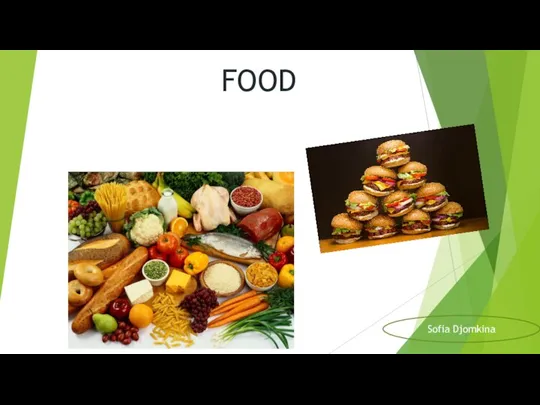 Food
Food Read the rubric and look at the key
 Christmas vocabulary (part 6)
 Prepositions of time. Practice by Alex's
 Bon anniversair. Futur proche
 Модальные глаголы и их эквиваленты
 Present Perfect vs Past Simple GO
 Battleship
 Complex subject. Gerund. Complex object
 Passive voice. Guessing game
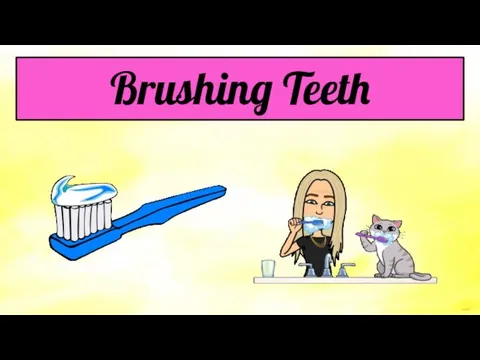 Brushing Teeth
 Flowers-2
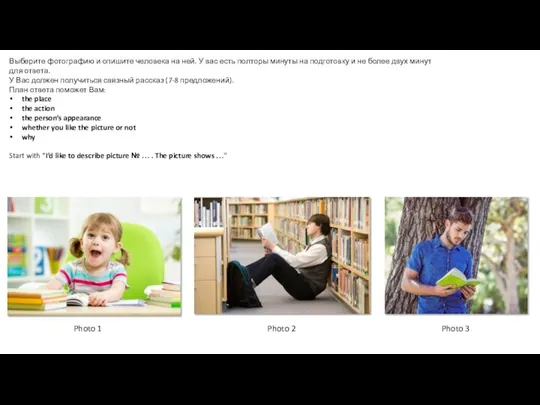 The place
 Piano. Some background info
 5 brave firefighters
 Gerund vs Infinitive
 Числительное. Грамматическая тема
 Our body
 My ABC
 Prepositions. Grammar
 City Country
 Monological statements on this topic
 Презентация к уроку английского языка "How Spot learns to bark" -
  Reading is Fun
 Speaking (говорение)
 Words in english. 2 класс
 Ағылшын тілі пәнін оқытуда ойын технологиясын қолдану