 Slaidy.com
- Косвенная речь

Содержание
- 2. Использованные источники Reported Speech
- 4. Речь какого-нибудь лица, передаваемая буквально так, как она была произнесена, называется прямой речью (direct speech). Речь,
- 5. Прямая речь может представлять собой: 1.повествовательное предложение 2.вопросительное предложение 3.повелительное предложение
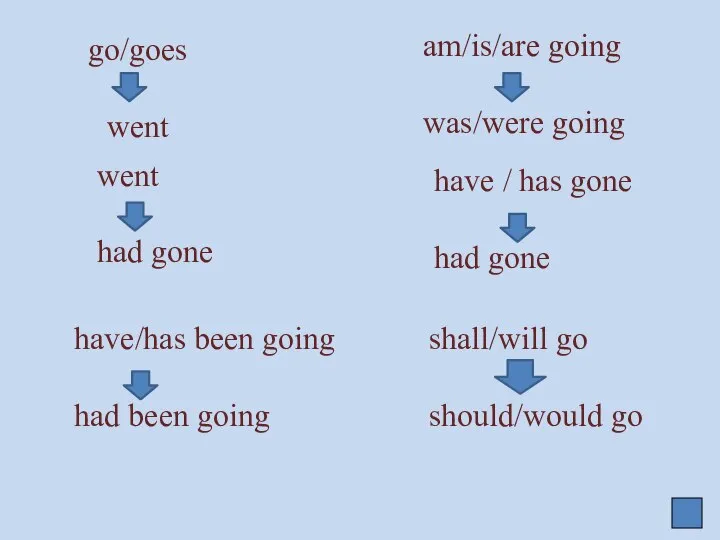
- 6. Present Simple Past Simple Present Progressive Past Progressive Past Simple Past Perfect Present Perfect Past Perfect
- 7. go/goes went am/is/are going was/were going went had gone have / has gone had gone have/has
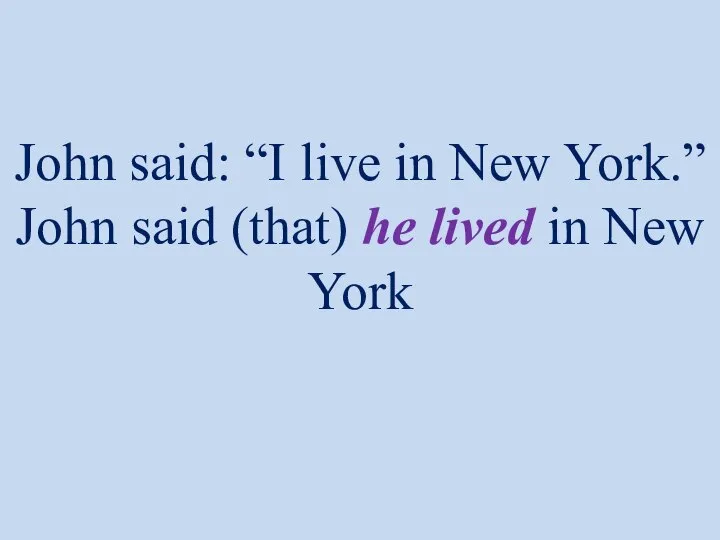
- 8. John said: “I live in New York.” John said (that) he lived in New York
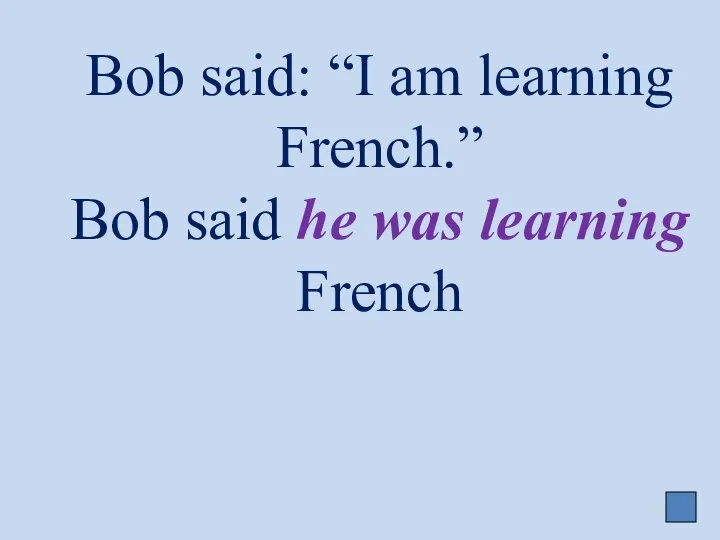
- 9. Bob said: “I am learning French.” Bob said he was learning French
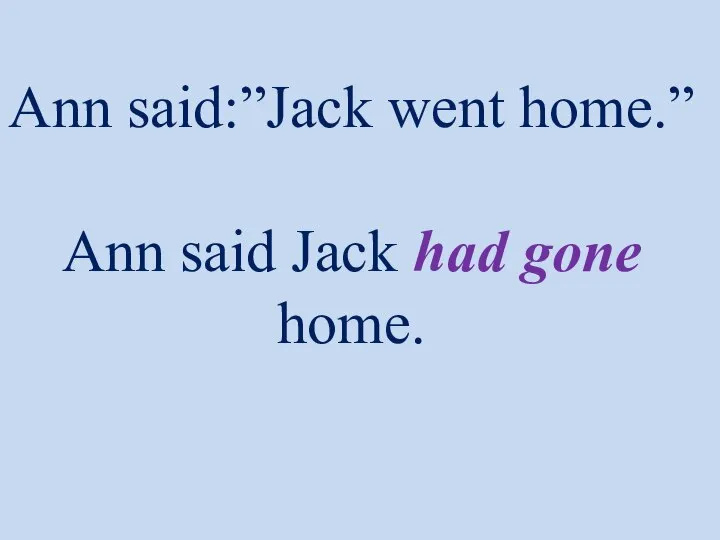
- 10. Ann said:”Jack went home.” Ann said Jack had gone home.
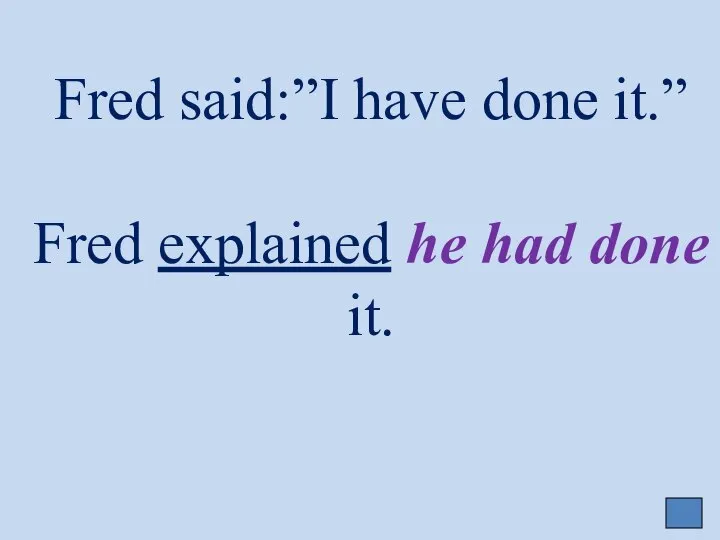
- 11. Fred said:”I have done it.” Fred explained he had done it.
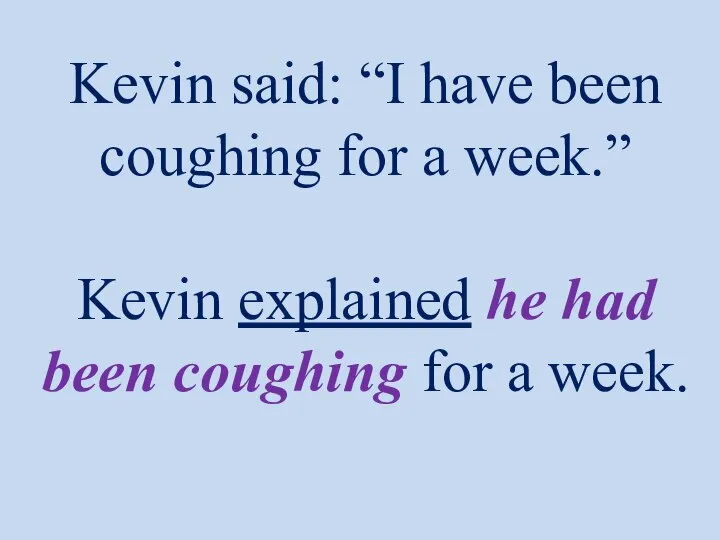
- 12. Kevin said: “I have been coughing for a week.” Kevin explained he had been coughing for
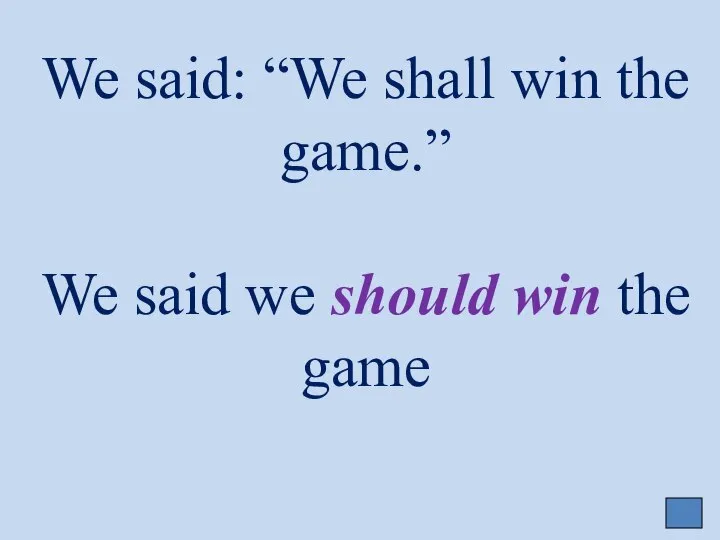
- 13. We said: “We shall win the game.” We said we should win the game
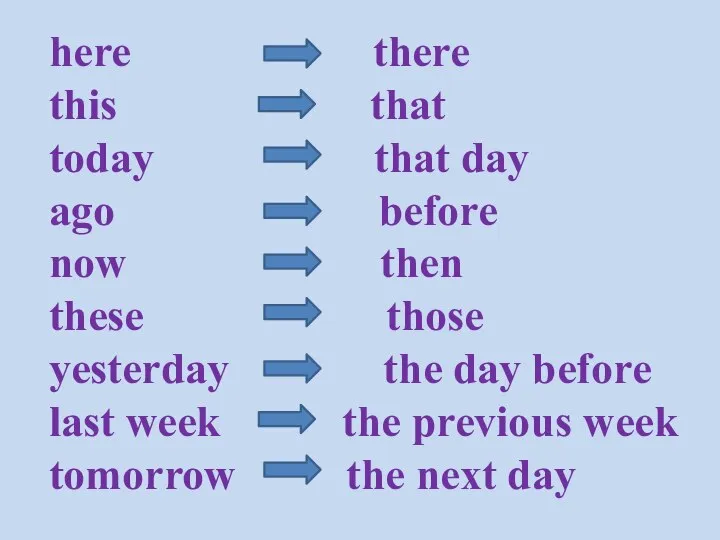
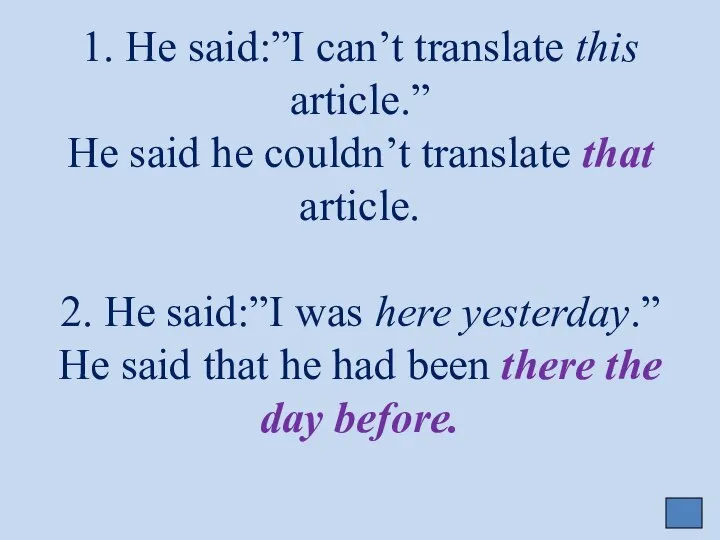
- 14. here there this that today that day ago before now then these those yesterday the day
- 15. 1. He said:”I can’t translate this article.” He said he couldn’t translate that article. 2. He
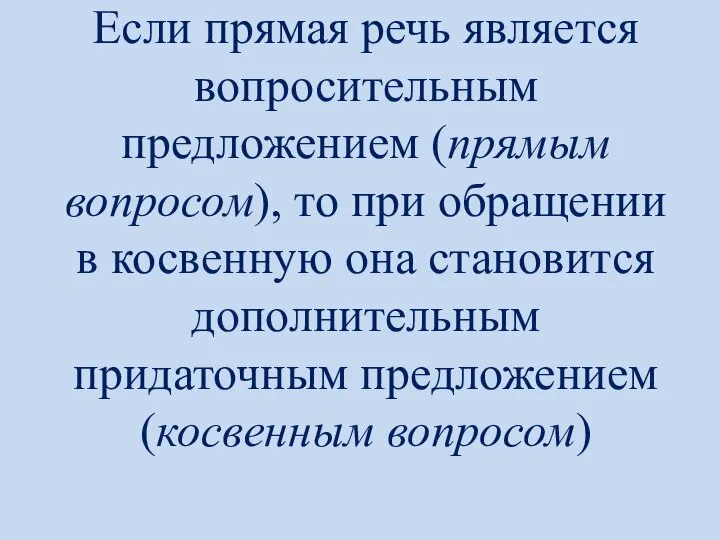
- 16. Если прямая речь является вопросительным предложением (прямым вопросом), то при обращении в косвенную она становится дополнительным
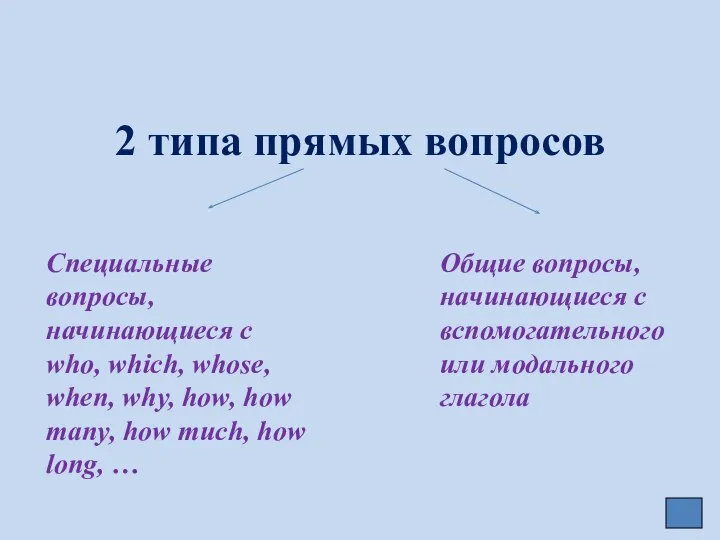
- 17. 2 типа прямых вопросов Специальные вопросы, начинающиеся с who, which, whose, when, why, how, how many,
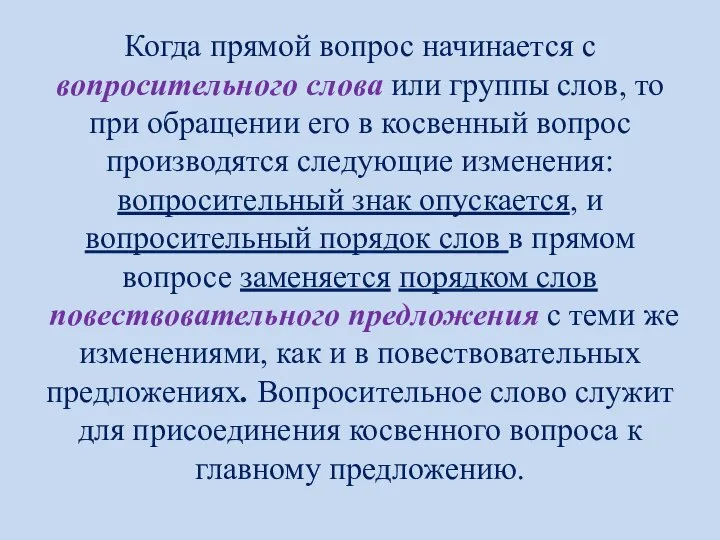
- 18. Когда прямой вопрос начинается с вопросительного слова или группы слов, то при обращении его в косвенный
- 19. 1.He asked me:”Why have you come so late?” He asked me why I had come so
- 20. Когда прямой вопрос начинается с вспомогательного или модального глагола, то косвенный вопрос присоединяется к главному предложению
- 21. 1. She asked:”Did John read the book?” She asked if John had read the book. 2.
- 22. Когда прямая речь представляет собой повелительное предложение, то при обращении её в косвенную производятся следующие изменения:
- 23. 1.She said to him:”Come at five o’clock.” She told him to come at five o’clock. 2.
- 24. Choose the correct verb form 1. The doctor said to me that I (shall/should) rest for
- 25. 1. The doctor said to me that I should rest for a week. 2. He said
- 26. Put them into Reported speech 1. “I’m going to the seaside soon,” she said. 2. “Does
- 28. Скачать презентацию

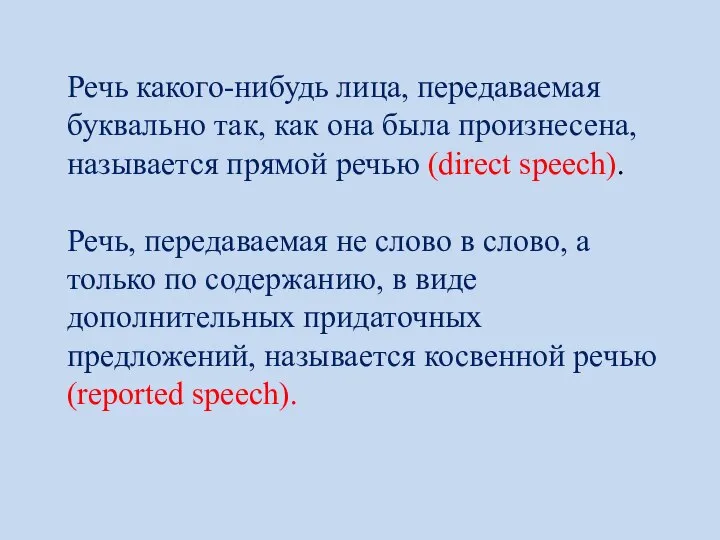
Слайд 4Речь какого-нибудь лица, передаваемая буквально так, как она была произнесена, называется прямой
Речь какого-нибудь лица, передаваемая буквально так, как она была произнесена, называется прямой
Слайд 5
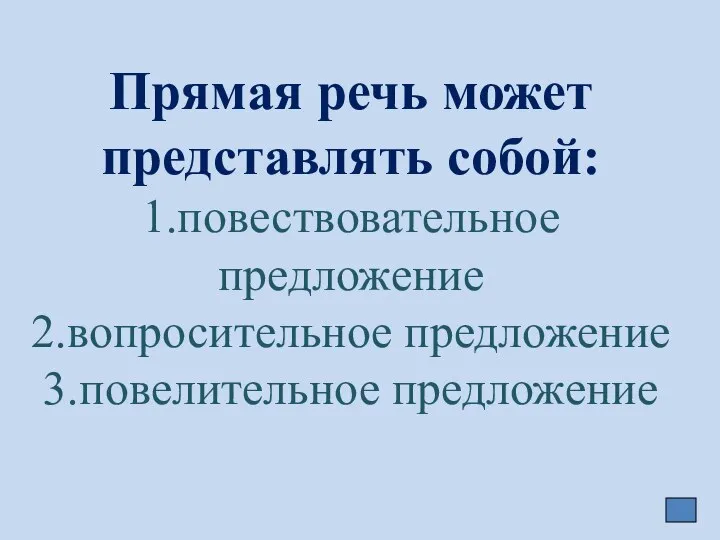
Прямая речь может представлять собой:
1.повествовательное предложение
2.вопросительное предложение
3.повелительное предложение
Прямая речь может представлять собой:
1.повествовательное предложение
2.вопросительное предложение
3.повелительное предложение
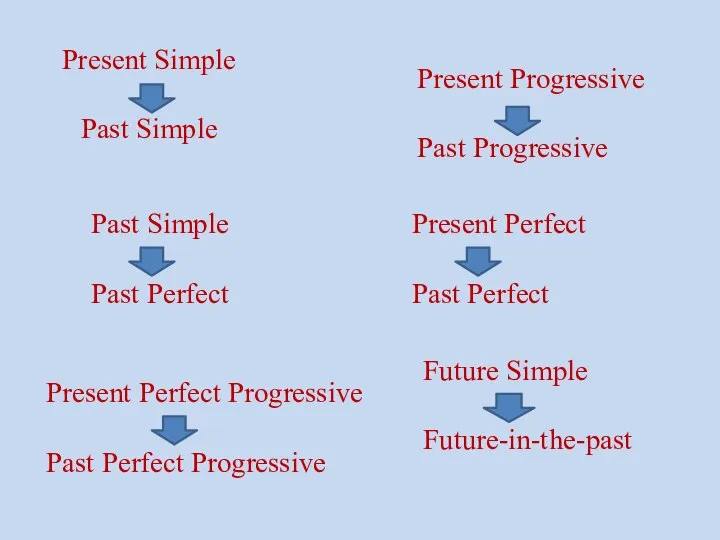
Слайд 6Present Simple
Past Simple
Present Progressive
Past Progressive
Past Simple
Past Perfect
Present Perfect
Past Perfect
Present Perfect Progressive
Past
Present Simple
Past Simple
Present Progressive
Past Progressive
Past Simple
Past Perfect
Present Perfect
Past Perfect
Present Perfect Progressive
Past
Слайд 7go/goes
went
am/is/are going
was/were going
went
had gone
have / has gone
had gone
have/has been going
had been going
shall/will
go/goes
went
am/is/are going
was/were going
went
had gone
have / has gone
had gone
have/has been going
had been going
shall/will
Слайд 8John said: “I live in New York.”
John said (that) he lived in
John said: “I live in New York.” John said (that) he lived in
Слайд 9Bob said: “I am learning French.”
Bob said he was learning French
Bob said: “I am learning French.”
Bob said he was learning French
Слайд 10Ann said:”Jack went home.”
Ann said Jack had gone home.
Ann said:”Jack went home.”
Ann said Jack had gone home.
Слайд 11Fred said:”I have done it.”
Fred explained he had done it.
Fred said:”I have done it.”
Fred explained he had done it.
Слайд 12Kevin said: “I have been coughing for a week.”
Kevin explained he had
Kevin said: “I have been coughing for a week.” Kevin explained he had
Слайд 13We said: “We shall win the game.”
We said we should win the
We said: “We shall win the game.” We said we should win the
Слайд 14here there
this that
today that day
ago before
now then
these those
yesterday the day before
last week
here there this that today that day ago before now then these those yesterday the day before last week
Слайд 151. He said:”I can’t translate this article.”
He said he couldn’t translate that
1. He said:”I can’t translate this article.” He said he couldn’t translate that
Слайд 16Если прямая речь является вопросительным предложением (прямым вопросом), то при обращении в
Если прямая речь является вопросительным предложением (прямым вопросом), то при обращении в
Слайд 172 типа прямых вопросов
Специальные вопросы, начинающиеся с
who, which, whose, when, why, how,
2 типа прямых вопросов
Специальные вопросы, начинающиеся с
who, which, whose, when, why, how,
Слайд 18
Когда прямой вопрос начинается с вопросительного слова или группы слов, то при
Когда прямой вопрос начинается с вопросительного слова или группы слов, то при
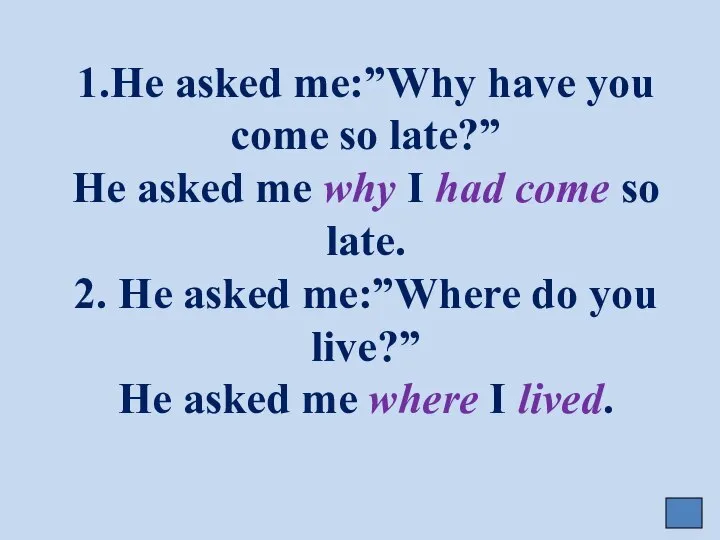
Слайд 191.He asked me:”Why have you come so late?”
He asked me why I
1.He asked me:”Why have you come so late?” He asked me why I
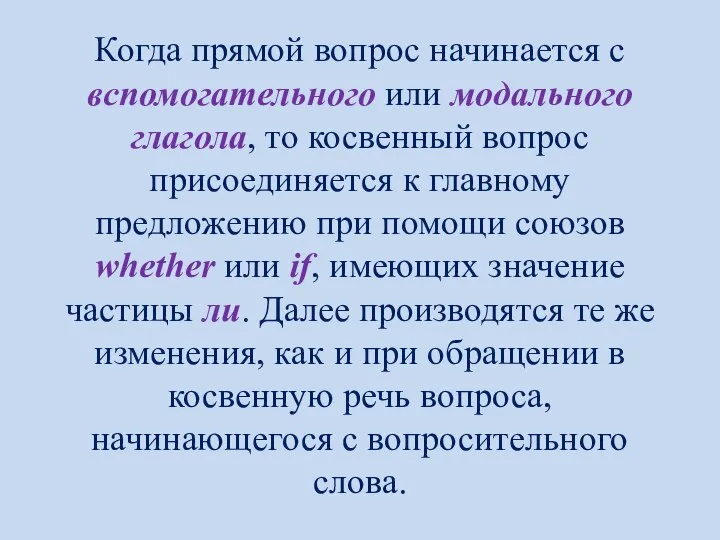
Слайд 20Когда прямой вопрос начинается с вспомогательного или модального глагола, то косвенный вопрос
Когда прямой вопрос начинается с вспомогательного или модального глагола, то косвенный вопрос
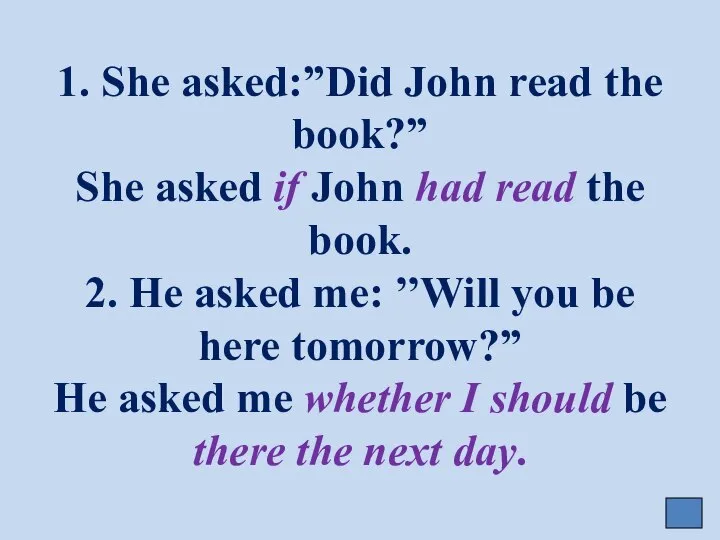
Слайд 211. She asked:”Did John read the book?”
She asked if John had read
1. She asked:”Did John read the book?” She asked if John had read
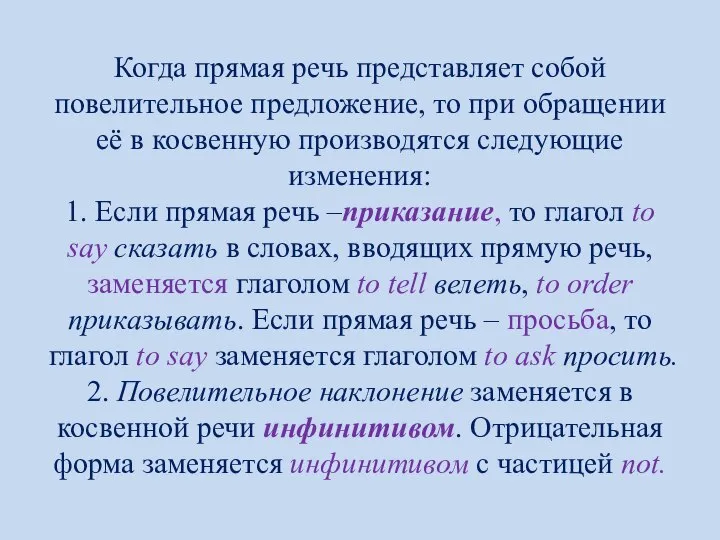
Слайд 22Когда прямая речь представляет собой повелительное предложение, то при обращении её в
Когда прямая речь представляет собой повелительное предложение, то при обращении её в
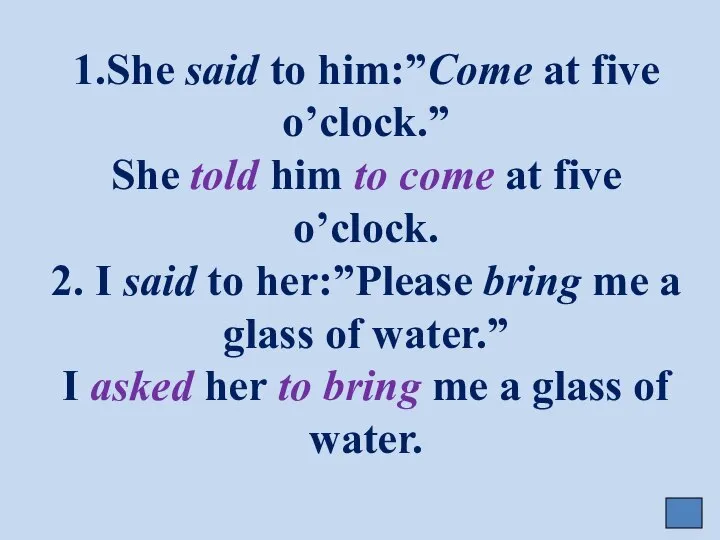
Слайд 231.She said to him:”Come at five o’clock.”
She told him to come at
1.She said to him:”Come at five o’clock.” She told him to come at
Слайд 24
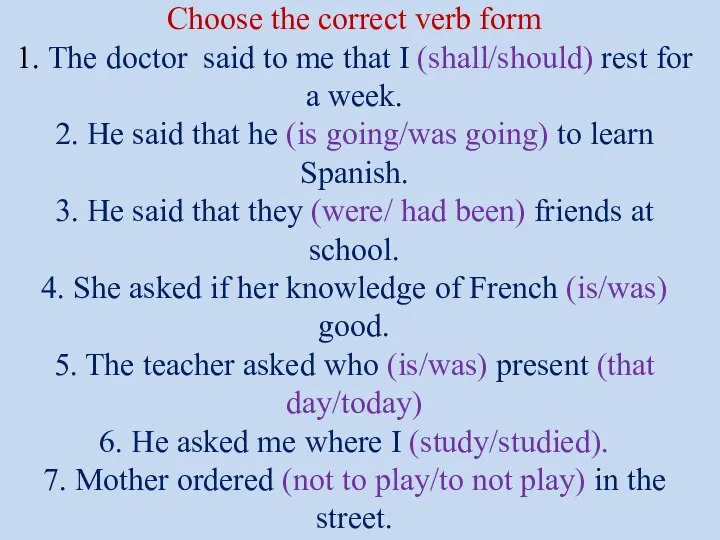
Choose the correct verb form
1. The doctor said to me that I
Choose the correct verb form 1. The doctor said to me that I
Слайд 25
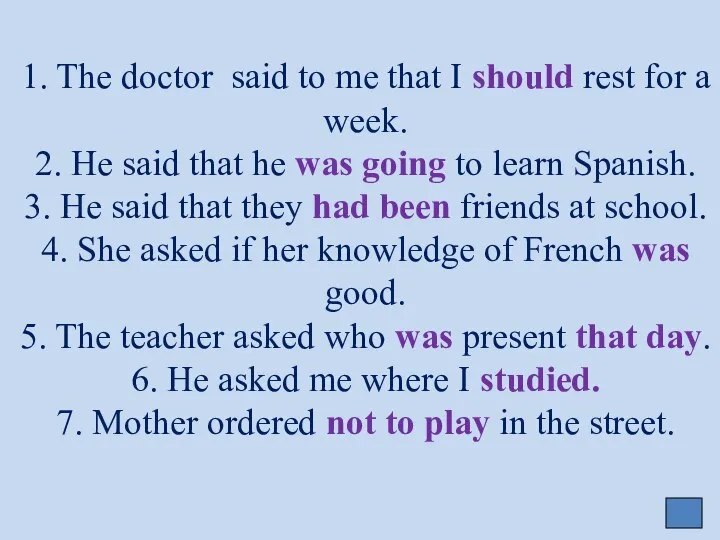
1. The doctor said to me that I should rest for a
1. The doctor said to me that I should rest for a
Слайд 26 Put them into Reported speech
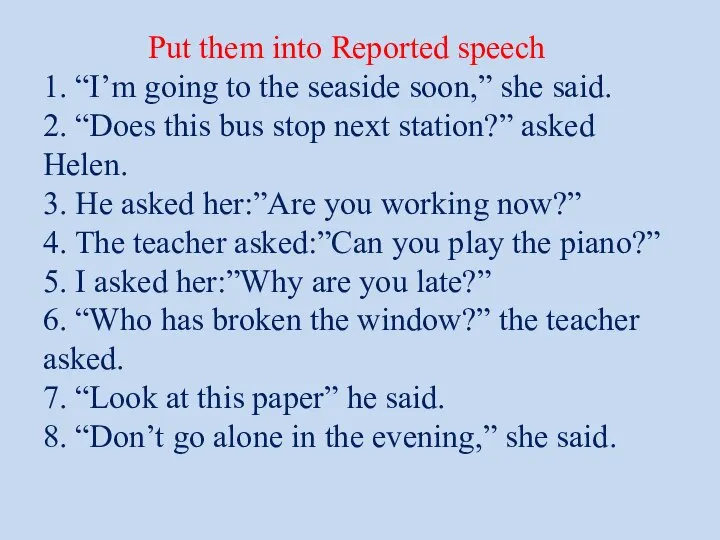
1. “I’m going to the seaside soon,”
Put them into Reported speech 1. “I’m going to the seaside soon,”
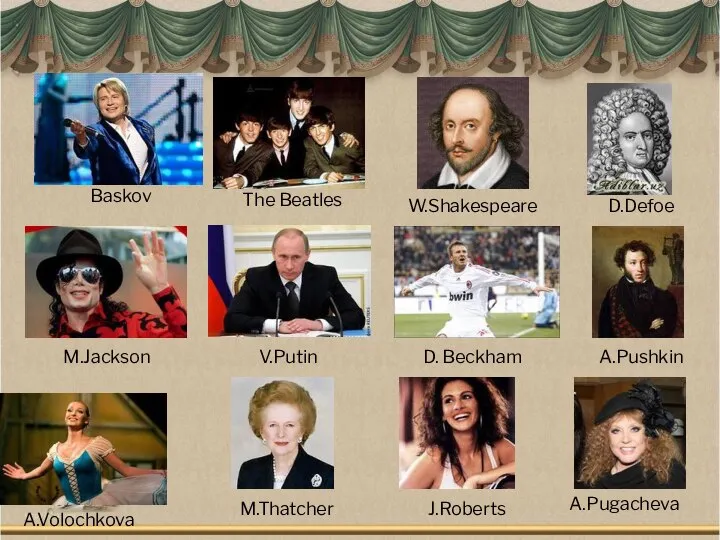 Famous people
 Sea-buckthorn (Облепиха)
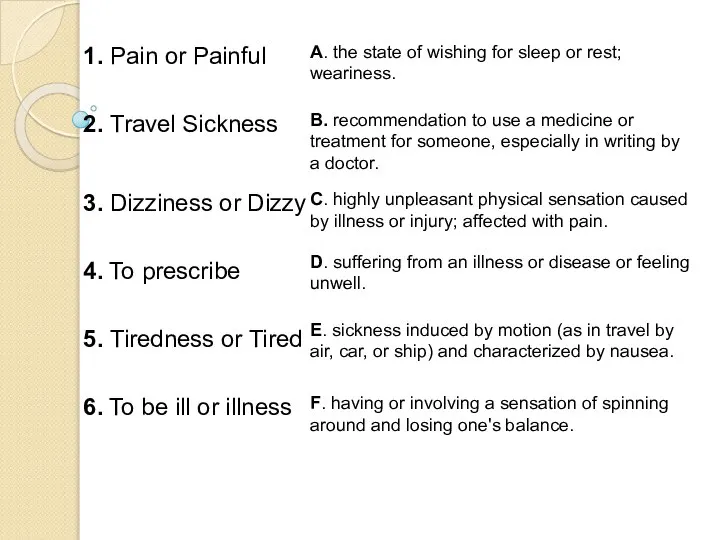 Final Final lesson present
 Рестораны. 8 класс
 Unit 5-2. Be careful
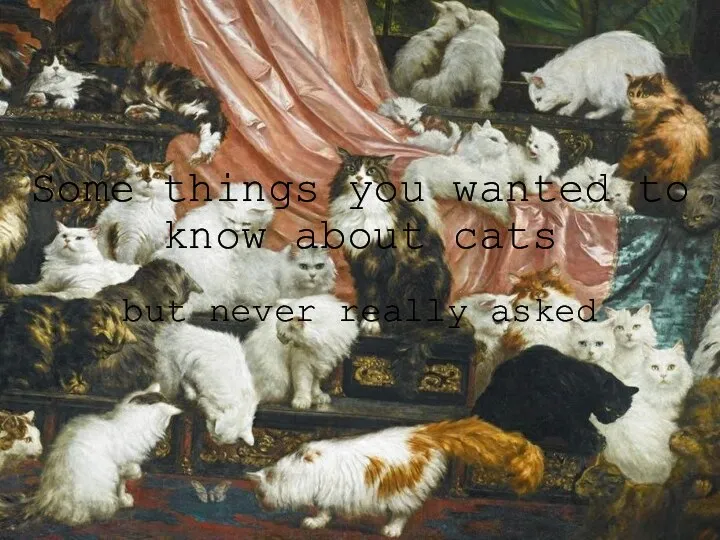 Some things you wanted to know about cats but never really asked
 Reading sound “i”
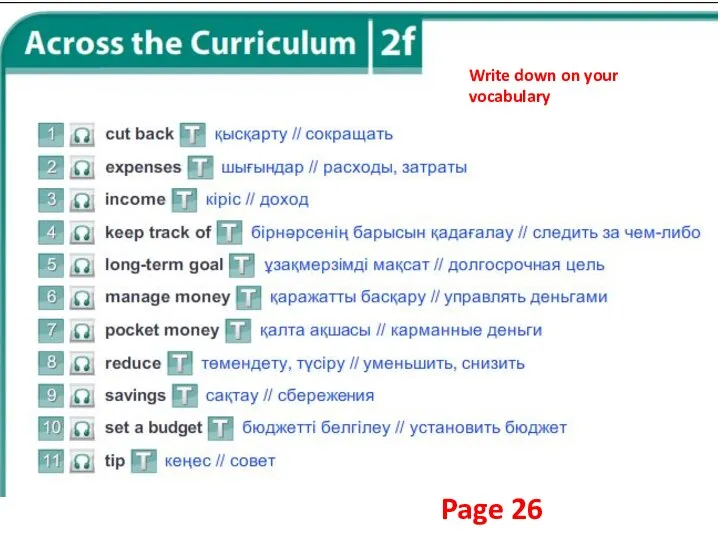 Write down on your vocabulary
 Interactive. English speaking
 Space Tiles
 Hello around the world
 Barry is a seaside resort with many attractions
 If I become invisible
 School timetable. English for my kids
 Префиксация. Продуктивные префиксы в английском языке
 Degrees of comparison
 Click on the right name
 Проектная деятельность в системе современных подходов к обучению английскому языку
 Adapted Book. Potato Head
 Tangled beginners
 Перевод художественной прозы на иностранный язык. Носитель vs не-носитель (на примере английского языка)
 Disjunctive questions. Practise your grammar
 Презентация на тему Animals (2 класс)
  Sport and sports games
 Repatriation. My family
 I can see
 Brilliant-2, animals and vegetables
 May might could game