 Slaidy.com
- Word Groups and Phraseological Units

Содержание
- 2. The main factors active in bringing words together are lexical and grammatical valency of the components
- 3. Lexical valency is the aptness of a word to appear in various collocations. All the words
- 4. Grammatical valency is the aptness of a word to appear in various grammatical structures. Restrictions of
- 5. Semantically all word-groups may be classified into motivated and non-motivated. Non-motivated word-groups are usually described as
- 6. The same as words phraseological units express a single notion and are used in a sentence
- 7. Phraseological Units The border-line between free or variable word-groups and phraseological units is not clearly defined
- 8. Phraseological units are habitually defined as non-motivated word-groups that cannot be freely made up in speech
- 9. The main characteristic features of phraseological units are: - stability of the lexical components - lack
- 10. Phraseological units can be classified according to the ways they are formed, according to the degree
- 11. A.V. Koonin classified phraseological units according to the way they are formed. He pointed out primary
- 12. 1) transferring the meaning of terminological word-groups: «launching pad» in its terminological meaning is «стартовая площадка»
- 13. 2) from free word groups by transforming their meaning, e.g. «granny farm» - «пансионат для престарелых»,
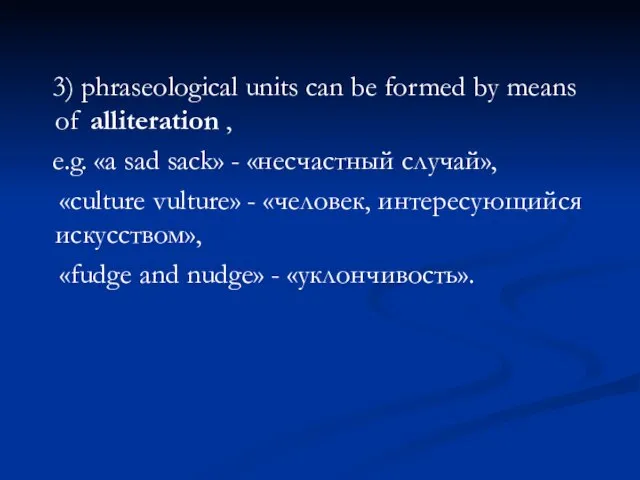
- 14. 3) phraseological units can be formed by means of alliteration , e.g. «a sad sack» -
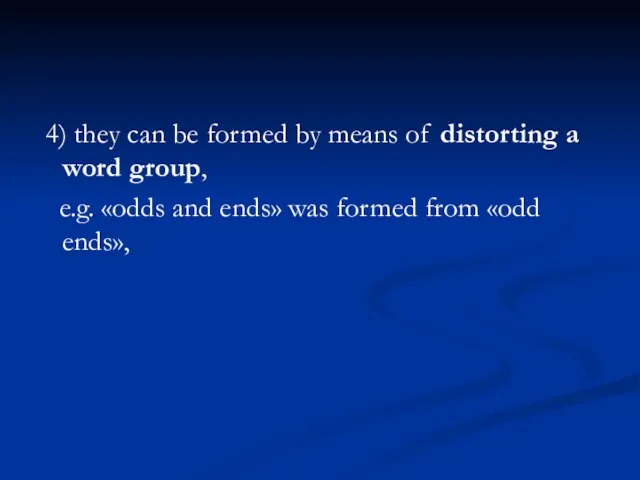
- 15. 4) they can be formed by means of distorting a word group, e.g. «odds and ends»
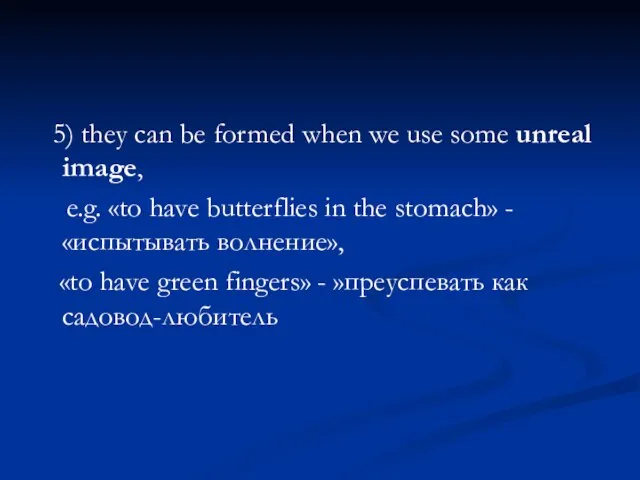
- 16. 5) they can be formed when we use some unreal image, e.g. «to have butterflies in
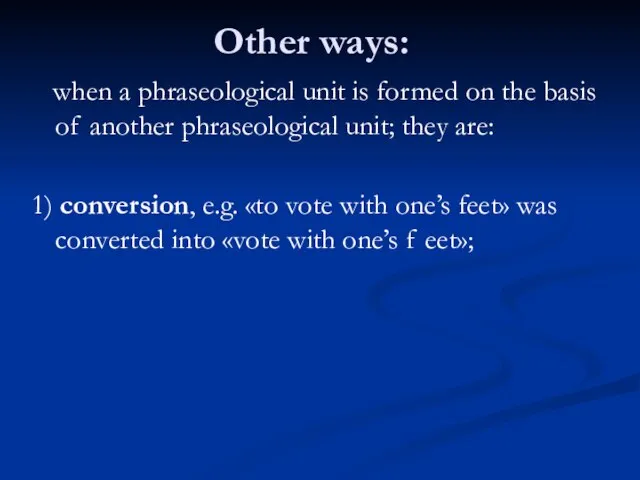
- 17. Other ways: when a phraseological unit is formed on the basis of another phraseological unit; they
- 18. 2) changing the grammar form, e.g. «Make hay while the sun shines» is transferred into a
- 19. 3)analogy, e.g. «Curiosity killed the cat» was transferred into «Care killed the cat»
- 20. 4) contrast, e.g. «cold surgery» - «a planned before operation» was formed by contrasting it with
- 21. 6) shortening of proverbs or sayings e.g. from the proverb «You can’t make a silk purse
- 22. 7)borrowing phraseological units from other languages e.g. « living space» (German), « to take the bull
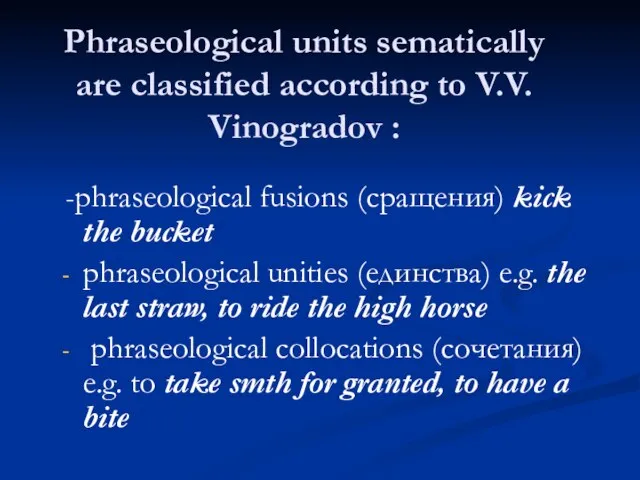
- 23. Phraseological units sematically are classified according to V.V. Vinogradov : -phraseological fusions (сращения) kick the bucket
- 25. Скачать презентацию
Слайд 3 Lexical valency is the aptness of a word to appear in
Lexical valency is the aptness of a word to appear in
Слайд 4 Grammatical valency is the aptness of a word to appear in
Grammatical valency is the aptness of a word to appear in
Слайд 5 Semantically all word-groups may be classified into motivated and non-motivated. Non-motivated
Semantically all word-groups may be classified into motivated and non-motivated. Non-motivated
Слайд 6 The same as words phraseological units express a single notion and
The same as words phraseological units express a single notion and
Слайд 7Phraseological Units
The border-line between free or variable word-groups and phraseological units
Phraseological Units
The border-line between free or variable word-groups and phraseological units
Слайд 8 Phraseological units are habitually defined as non-motivated word-groups that cannot be
Phraseological units are habitually defined as non-motivated word-groups that cannot be
Слайд 9 The main characteristic features of phraseological units are:
- stability of
The main characteristic features of phraseological units are:
- stability of
Слайд 10 Phraseological units can be classified according to the ways they are
Phraseological units can be classified according to the ways they are
Слайд 11 A.V. Koonin classified phraseological units according to the way they are
A.V. Koonin classified phraseological units according to the way they are
Слайд 12 1) transferring the meaning of terminological word-groups:
«launching pad» in
1) transferring the meaning of terminological word-groups:
«launching pad» in
Слайд 13 2) from free word groups by transforming their meaning,
e.g.
2) from free word groups by transforming their meaning,
e.g.
Слайд 14 3) phraseological units can be formed by means of alliteration ,
3) phraseological units can be formed by means of alliteration ,
Слайд 15 4) they can be formed by means of distorting a word
4) they can be formed by means of distorting a word
Слайд 16 5) they can be formed when we use some unreal image,
5) they can be formed when we use some unreal image,
Слайд 17Other ways:
when a phraseological unit is formed on the basis of
Other ways:
when a phraseological unit is formed on the basis of
Слайд 182) changing the grammar form, e.g. «Make hay while the sun shines»
2) changing the grammar form, e.g. «Make hay while the sun shines»
Слайд 19 3)analogy,
e.g. «Curiosity killed the cat» was transferred into «Care
3)analogy,
e.g. «Curiosity killed the cat» was transferred into «Care
Слайд 204) contrast,
e.g. «cold surgery» - «a planned before operation» was
4) contrast,
e.g. «cold surgery» - «a planned before operation» was
Слайд 21 6) shortening of proverbs or sayings
e.g. from the proverb
6) shortening of proverbs or sayings
e.g. from the proverb

Слайд 22 7)borrowing phraseological units from other languages
e.g. « living space» (German),
7)borrowing phraseological units from other languages
e.g. « living space» (German),
Слайд 23Phraseological units sematically are classified according to V.V. Vinogradov :
-phraseological
Phraseological units sematically are classified according to V.V. Vinogradov :
-phraseological
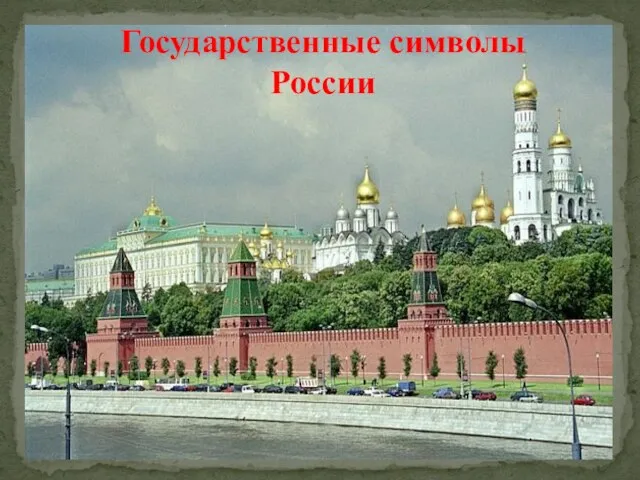 Государственные символы России
 Развитие умение писать глаголы с изученными орфограммами
 Неудобно! Неоперативно! Неактуально! У КАЖДОЙ СТРАХОВОЙ КОМПАНИИ СВОЙ КАЛЬКУЛЯТОР ПРИХОДИТСЯ МНОГО ВРЕМЕНИ ТРАТИТЬ НА РАСЧЕТ ВЕРС
 Оцінка. Як виявити оцінку
 История русской рубашки. 6 класс
 Родом из бетонной коробки, или новейшая архитектура Петербурга
 Культура и искусство Японии
 Танцы древнего Египта и Греции
 2012 год планирование
 Презентация на тему Биогеоценоз и биоценоз
 Достопримечательности Кувандыкского района
 Чем компенсировать слабость? Занятие для 2 взрослого разряда
 ОСНОВНЫЕ ПОЛОЖЕНИЯ И ПРИОРИТЕТЫ РАЗВИТИЯ ГИДРОМЕТЕОРОЛОГИЧЕСКОЙ ДЕЯТЕЛЬНОСТИ НА ПЕРИОД ДО 2030 ГОДА
 А
А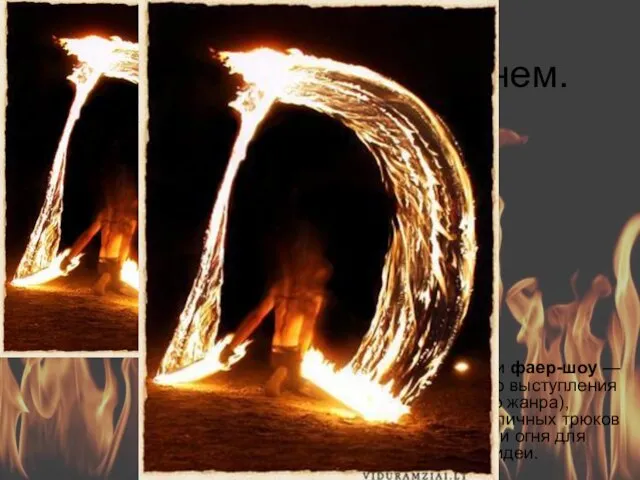 Танцы с огнем. Огненное шоу
 Презентацияшкольной библиотеки МОУ Пичаевской СОШ им. В.П.Беляева
 Парфюмерия Леди Гага
 собственность эк 11
 Одаренность - это системное, развивающееся в течение жизни качество психики, которое определяет возможность достижения человеком
  Teaching reading communicatively
  Министерство образования и науки Республики ТываXVI -я Республиканская научно-практическая конференция школьников «Шаг в будуще
 Содержание профессиональной компетентности учителя
 Стабильная работа в чокофуд ОСА vs AM
 РУССКИЙ ЯЗЫК И ОБЩЕСТВО
 Государственное управление:
 Я жить хочу, чтоб мыслить и страдать
 Храм 5 класс
 Среда программирования Delphi