Презентации, доклады, проекты без категории

Exam instructions
Exam instructions
Course specifications Assessment scheme: Quiz 1: 5% Assignment: 40% Quiz 2: 5% EXAM: 50% Requirements for student to be awarded a passing grade in the course: To be assured of receiving a passing grade a student must achieve at least 50% of the total weighted marks available for the course. Method used to combine assessment results to attain final grade: The final grades for students will be assigned on the basis of the aggregate of the weighted marks obtained for each of the summative assessment items in the course. Examination information: This is a closed examination. Candidates are allowed to bring only writing and drawing instruments into the examination. Students are not permitted to take dictionaries, mobile telephones, pagers or other electronic means of communication into the examination room. (MGT1001 Course specification) Exam Structure Total time for the exam: 2 HOURS Total marks: 50 Students must answer the questions on the blue examination paper. No examination answer booklet is provided.   Students are not permitted: to write on the examination answer sheet during perusal.   Please write your name and student number on all examination papers. This examination consists of two parts: Part A: short answer questions: sixteen (16) questions worth a total of forty (40) marks. Part B: application question: one (1) question worth a total of ten (10) marks.   Write your answers in the spaces below each question on the blue examination paper.
Продолжить чтение
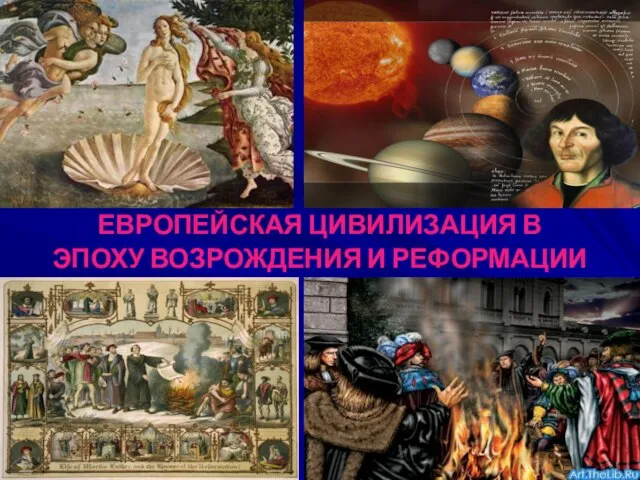
ЕВРОПЕЙСКАЯ ЦИВИЛИЗАЦИЯ В ЭПОХУ ВОЗРОЖДЕНИЯ И РЕФОРМАЦИИ
В ПЕРИОД ПОЗДНЕГО СРЕДНЕВЕКОВЬЯ НАЧАЛСЯ ПРОЦЕСС МОДЕРНИЗАЦИИ В конце XIV–XVII вв. начался процесс перехода от аграрной экономики с преобладанием натурального хозяйства к более высокому укладу хозяйственной жизни — промышленной экономике с развитыми товарно-денежными отношениями и соответствующей сменой социальной, политической и духовной сфер общественных отношений. ДЛЯ ЭПОХИ ВОЗРОЖДЕНИЯ И РЕФОРМАЦИИ ХАРАКТЕРНЫ НОВАЦИИ В МЫШЛЕНИЯИ И ЦЕННОСТНЫХ ОРИЕНТИРАХ Появление раннего средневекового производства в городах Италии, зарождение буржуазии Новые представления о мире, предприимчивость и энергия людей нового времени Потребность общества в образованных людях, появление интеллигенции ПРЕДПОСЫЛКИ ВОЗНИКНОВЕНИЯ КУЛЬТУРЫ ВОЗРОЖДЕНИЯ
Продолжить чтение
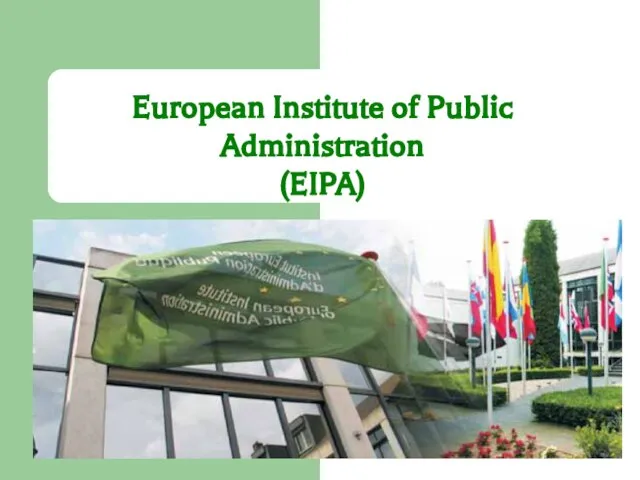
European Institute of Public Administration
EIPA Main activities New activities Summary EIPA Created in March 1981 at the time of the first European Council held in Maastricht, the European Institute of Public Administration is an establishment providing vocational training, applied research and consultancy for the public administrations of the EU Member States, the candidate countries, as well as the European Commission and other institutions and bodies of the European Union. EIPA’s objective is to contribute to the development and dissemination of knowledge on EU decision-making procedures and policies, on the organization and functioning of national and regional public administrations – in particular from the perspective of their growing European dimension – and on the different components of public management. The Board of Governors, which is chaired by Henning Christophersen, former Vice-President of the European Commission and member of the Presidium of the Convention on the Future of Europe, is composed of representatives of most EU Member States (in principle the Director-General of public administration and public service of each country); in addition to the fifteen states that were already member at the time of the last enlargement of the Union, the following countries of the ten that acceded on 1 May 2004 are now represented as well: Cyprus, the Czech Republic, Estonia, Hungary, Poland, Malta and Lithuania. Furthermore, since the reform of EIPA’s Constitution in 2001, the countries “associated” with the Institute (Bulgaria, Norway and Romania) each designate a representative who participates in the meetings of the Board of Governors in an advisory capacity.
Продолжить чтение