ANALYSIS OF FOOD AND FOOD PRODUCTS
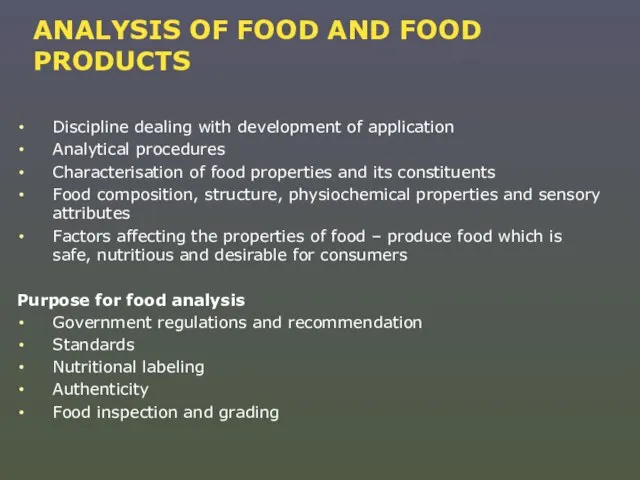
GOVERNMENT REGULATIONS AND RECOMMENDATION AND STANDARDS a. Maintain general quality of food supply, ensuring food provided to the consumer are safe with acceptable nutritional composition so that the are able to make their choices in their diet b. Government Department (Food and Drug Administration, (FDA), US Department of Agriculture (USDA), National Marine Fisheries Service (NMFS), Environmental Protection Agency (EPA) Responsible for regulating particular sectors of the food industry and publish document on the standards concerning the composition, quality, inspection and labeling Mandatory standards (standards of identity, standards of quality and standards of fill-of-containers) Voluntary Standards (standards of grade) – food is graded based on quality, as superior product are costly priced. NUTRITIONAL LABELING Regulations pertaining to the nutritional labeling of foods Mandatory for all food products to have standardized nutritional level. Important for consumer – informed choice for their diet Total calorie value of food, total fat, saturated fatty acids, cholesterol, sodium, carbohydrate, dietary fiber, sugars, protein, vitamins, calcium and iron – information provided on food labels Approved health claims – link between food components and certain diseases. (Eg. Calcium and osteoporosis, sodium and high blood pressure, soluble fiber or cholesterol and heart diseases. Consumers can plan nutritional and balanced or healthy diet; over consumption of certain food may cause health problem or otherwise good food will be benficial to health.
 Slaidy.com