 Slaidy.com
- Antidepressants

Содержание
- 2. Antidepressants are the second- most-prescribed-medication in the United States 15 million Americans are affected by depression
- 3. Антидепрессанты - второе по популярности лекарство в США 15 миллионов американцев страдают от депрессии каждый год
- 4. Antidepressant are use for the treatment of several different forms of depression and other psychological disorders.
- 5. Антидепрессанты используются для лечения различных форм депрессии и других психологических расстройств Психологические расстройства, которые могут сопровождать,
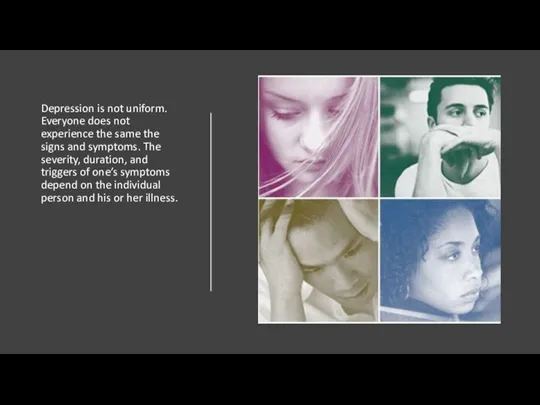
- 6. Depression is not uniform. Everyone does not experience the same the signs and symptoms. The severity,
- 7. Депрессия не однородна. У всех разные признаки и симптомы. Выраженность, продолжительность и триггеры симптомов зависят от
- 8. Antidepressants Tricyclic and related antidepressants (TCA) E.g. amitriptyline, imipramine, doxepin, mianserin, trazodone Monoamine-oxidase inhibitors (MAOI) E.g.
- 9. Tricyclic and related antidepressants (TCA) Amitriptyline (Saroten®) Clomipramine (Anafranil®) Dothiepin (a.k.a. dosulepin, Prothiaden®) Doxepin (Sinequan®) Imipramine
- 12. Tricyclic and related antidepressants (TCA) Mechanism of action Blocks neuronal uptake both norepinephrine and serotonin Initial
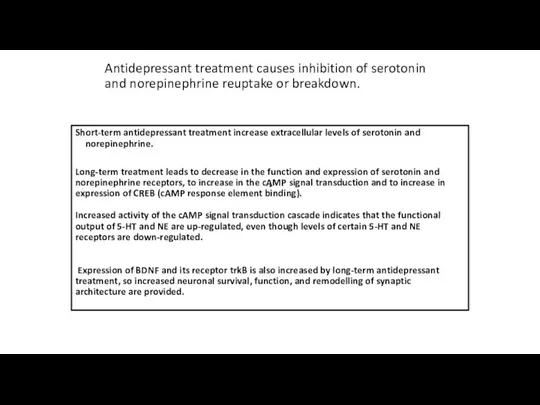
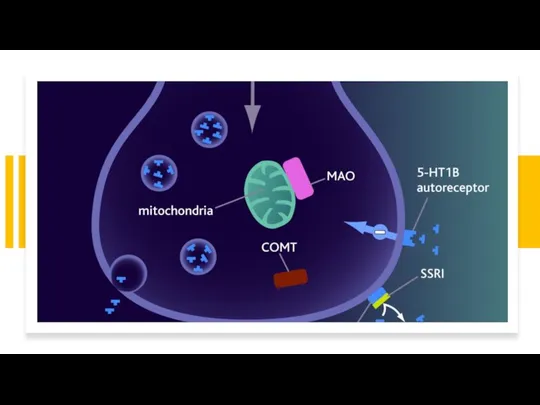
- 13. Antidepressant treatment causes inhibition of serotonin and norepinephrine reuptake or breakdown. Short-term antidepressant treatment increase extracellular
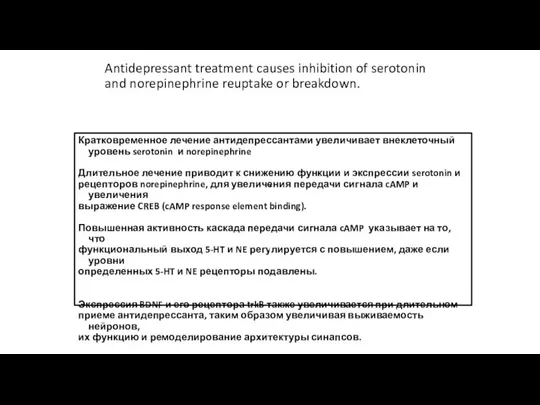
- 14. Antidepressant treatment causes inhibition of serotonin and norepinephrine reuptake or breakdown. Кратковременное лечение антидепрессантами увеличивает внеклеточный
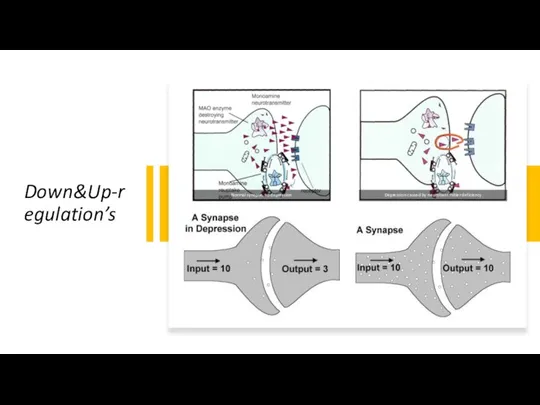
- 15. Down&Up-regulation’s Normal synapse, no depression Depression caused by neurotransmitter deficiency
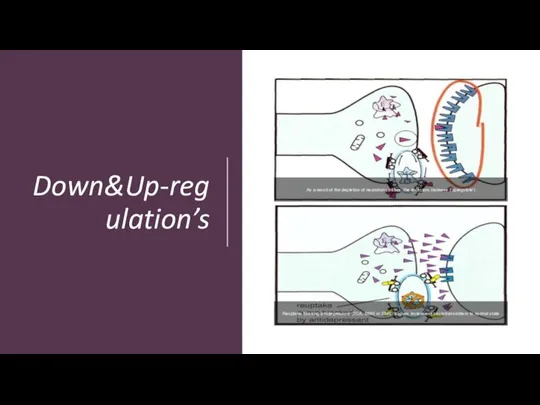
- 16. As a result of the depletion of neurotransmitters, the receptors increase ('upregulate') Reuptake blocking antidepressant (TCA,
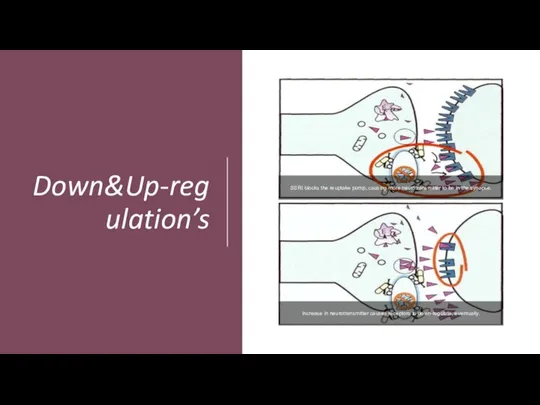
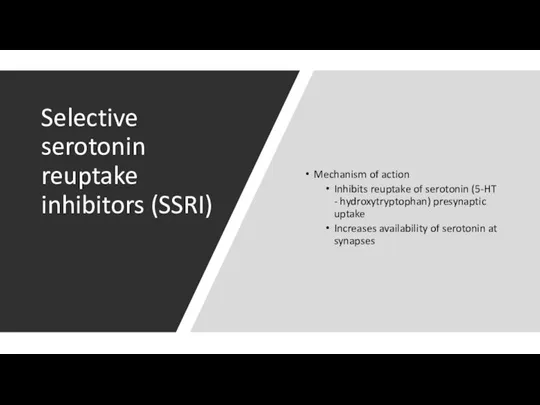
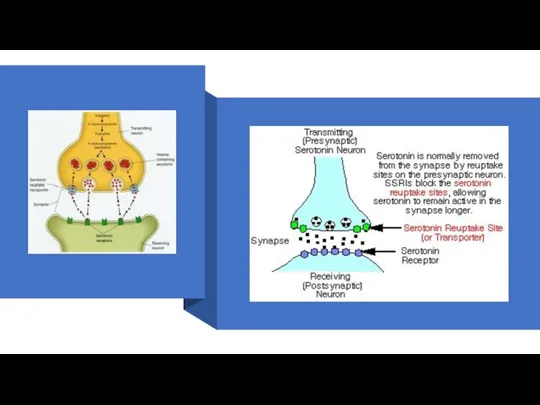
- 17. SSRI blocks the reuptake pump, causing more neurotransmitter to be in the synapse. Increase in neurotransmitter
- 19. Tricyclic and related antidepressants (TCA) Properties Inexpensive, generic Some with off-label use, e.g. Neuropathy with amitriptyline
- 20. Tricyclic and related antidepressants (TCA) Adverse effects Orthostatic hypotension Reduced by moving slowly when assuming upright
- 21. Tricyclic and related antidepressants (TCA) Adverse effects Cardiac toxicity Arrhythmias and heart block ECG recommended before
- 22. Tricyclic and related antidepressants (TCA) Drug interactions CNS depressants Narcotics, benzodiazepines Additive CNS depression Anticholinergics Additive
- 23. Monoamine-oxidase inhibitors (MAOI) Moclobemide (Aurorix®) (RIMAs - Reversible Inhibitors of Monoamine Oxidase) Phenelzine Isocarboxazid Tranylcypromine
- 24. Monoamine-oxidase inhibitors (MAOI) Mechanism of action Inhibit both MAO-A and MAO-B Phenelzine, tranylcypromine Selective & reversible
- 25. Monoamine-oxidase inhibitors (MAOI) Properties Useful in atypical depression (somnolence and weight gain), refractory disorders and certain
- 26. Monoamine-oxidase inhibitors (MAOI) Properties Drug interactions Other antidepressants should not be started for 2 weeks after
- 27. Monoamine-oxidase inhibitors (MAOI) Adverse effects Hypertensive crisis Severe occipital headache, photophobia, palpitation, sharply increased in BP
- 28. Monoamine-oxidase inhibitors (MAOI) Adverse effects Hypertensive crisis Severe occipital headache, photophobia, palpitation, sharply increased in BP
- 29. Monoamine-oxidase inhibitors (MAOI) Adverse effects Orthostatic hypotension Insomnia Weight gain Sexual dysfunction
- 30. Selective serotonin reuptake inhibitors (SSRI) Fluoxetine (Prozac®) Fluvoxamine (Faverin®) Paroxetine (Seroxat®) Sertraline (Zoloft®) Citalopram (Cipram®) Escitalopram
- 31. Selective serotonin reuptake inhibitors (SSRI) Mechanism of action Inhibits reuptake of serotonin (5-HT - hydroxytryptophan) presynaptic
- 34. Selective serotonin reuptake inhibitors (SSRI) Properties Overdose less likely to be fatal Less anticholinergic side effects
- 35. Selective serotonin reuptake inhibitors (SSRI) Properties Fluoxetine Most stimulating SSRI Indicated for Premenstrual Dysphoric Disorder (PMDD)
- 36. Selective serotonin reuptake inhibitors (SSRI) Adverse effects Headache GI Nausea, diarrhoea, loss of appetite Titrate dose
- 37. Selective Serotonin Reuptake |Inhibitors (SSRI) Adverse effects Somnolence or insomnia Dose in morning for insomnia Increase
- 38. Selective Serotonin Reuptake |Inhibitors (SSRI) Adverse effects Serotonergic syndrome Aetiology - SSRI or MAOI + something
- 40. Serotonin Norepinephrine Reuptake Inhibitor (SNRI) Duloxetine (Cymbalta®) Venlafaxine (Efexor®, Efexor XR®) Mechanism of action Inhibits norepinephrine
- 42. Serotonin Norepinephrine Reuptake Inhibitor (SNRI) Venlafaxine (Efexor®, Efexor XR®) Properties and Adverse effects Also for anxiety
- 43. Serotonin Norepinephrine Reuptake Inhibitor (SNRI) Duloxetine (Cymbalta®) Properties and Adverse effects More potent than venlafaxine?! Also
- 44. Mixed serotonin norepinephrine effects Mirtazapine (Mirtazon®, Remeron®, Remeron SolTab®) Tetracyclic antidepressant (noradrenergic and specific serotonergic antidepressants
- 46. Mixed serotonin norepinephrine effects Mirtazapine (Mirtazon®, Remeron®, Remeron SolTab®) Properties and Adverse effects Fewer anticholinergic effects
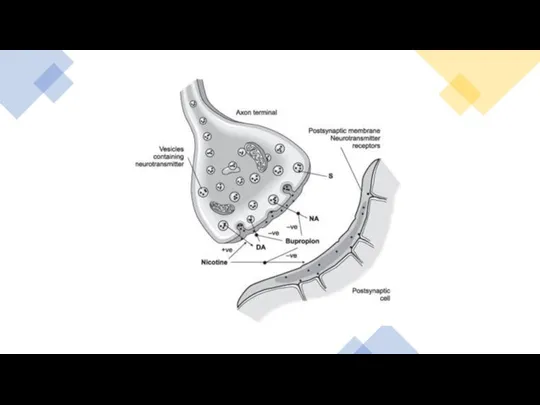
- 47. Norepinephrine Dopamine Reuptake Inhibitor (NDRI) Bupropion (Wellbutrin SR®) Mechanism of action Inhibits weakly the neuronal uptake
- 49. Norepinephrine Dopamine Reuptake Inhibitor (NDRI) Bupropion (Wellbutrin SR®) Properties and side effects GI side effects, confusion,
- 50. Other antidepressants Flupenthixol (Fluanxol®) Typical antipsychotic Antidepressant effect at low doses Antipsychotic dose: 3-9mg twice daily
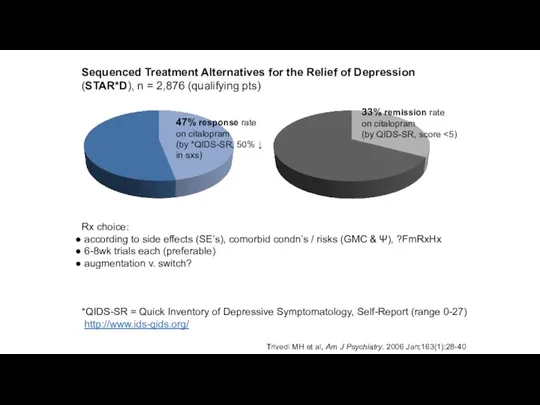
- 51. Trivedi MH et al, Am J Psychiatry. 2006 Jan;163(1):28-40 47% response rate on citalopram (by *QIDS-SR,
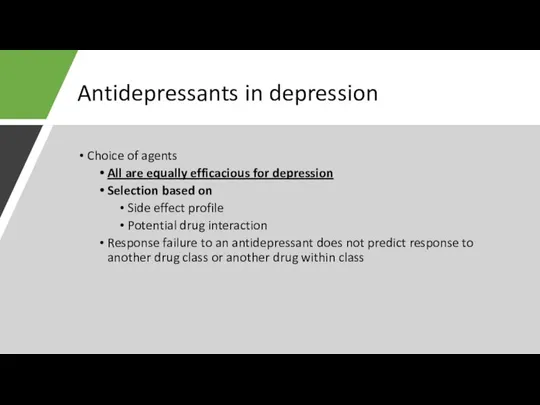
- 52. Antidepressants in depression Choice of agents All are equally efficacious for depression Selection based on Side
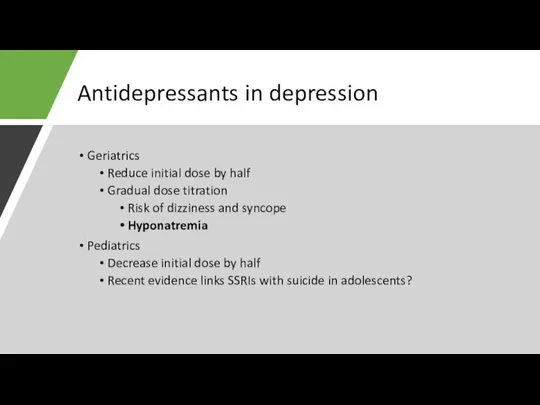
- 53. Antidepressants in depression Geriatrics Reduce initial dose by half Gradual dose titration Risk of dizziness and
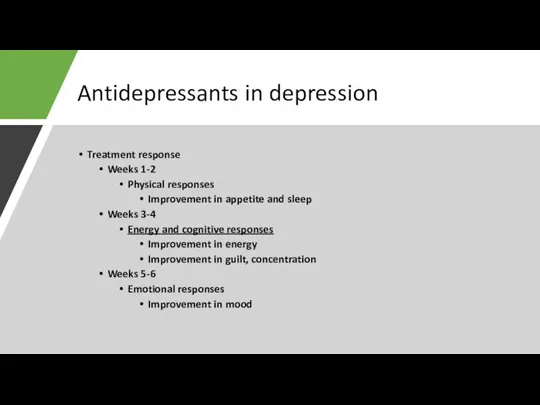
- 54. Antidepressants in depression Treatment response Weeks 1-2 Physical responses Improvement in appetite and sleep Weeks 3-4
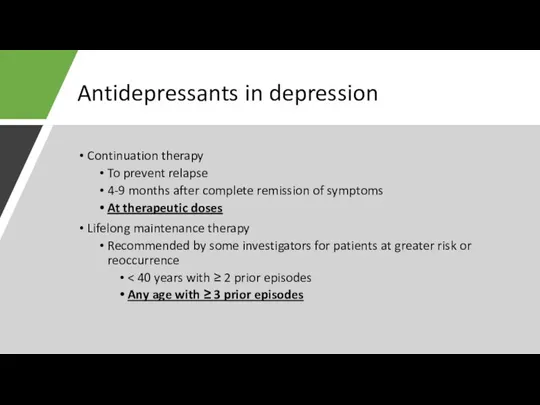
- 55. Antidepressants in depression Continuation therapy To prevent relapse 4-9 months after complete remission of symptoms At
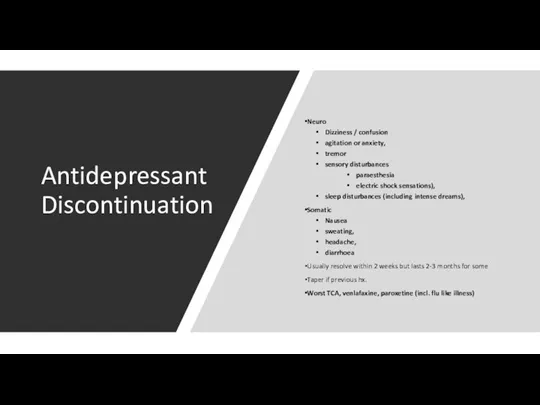
- 56. Antidepressant Discontinuation Neuro Dizziness / confusion agitation or anxiety, tremor sensory disturbances paraesthesia electric shock sensations),
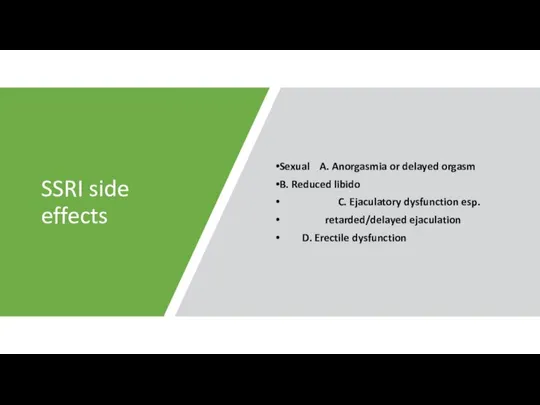
- 57. SSRI side effects Sexual A. Anorgasmia or delayed orgasm B. Reduced libido C. Ejaculatory dysfunction esp.
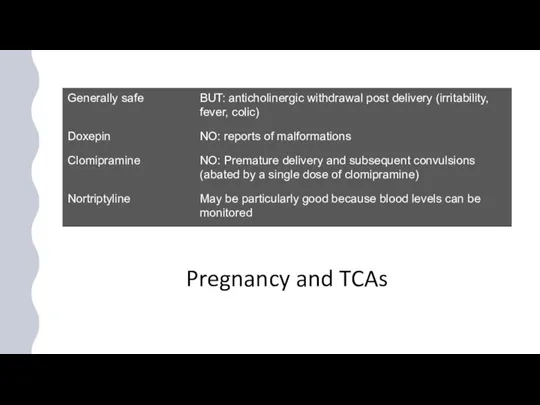
- 58. Pregnancy and TCAs
- 59. Risks of SSRIs and Pregnancy
- 60. Risks of SSRIs and Pregnancy
- 61. Non-antidepressants in depression Anxiolytics Antipsychotics Use may mask the true diagnosis Used with caution But are
- 62. Take away Есть несколько групп антидепрессантов: а. отличающихся по химической структуре, б. по воздействию на нейротрансмитерную
- 63. Take away Все антидепрессанты эффективны одинаков При назначении антидепрессантов очень важно учитывать и, за частую, использовать
- 65. Скачать презентацию
Слайд 2Antidepressants are the second- most-prescribed-medication in the United States
15 million Americans are
Antidepressants are the second- most-prescribed-medication in the United States
15 million Americans are
Слайд 3Антидепрессанты - второе по популярности лекарство в США
15 миллионов американцев страдают от
Антидепрессанты - второе по популярности лекарство в США
15 миллионов американцев страдают от
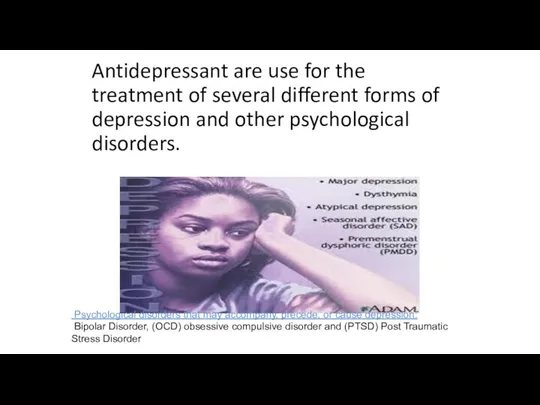
Слайд 4Antidepressant are use for the treatment of several different forms of depression
Antidepressant are use for the treatment of several different forms of depression
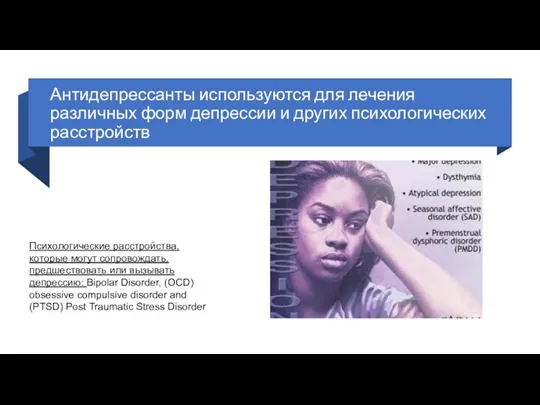
Слайд 5Антидепрессанты используются для лечения различных форм депрессии и других психологических расстройств
Психологические расстройства,
Антидепрессанты используются для лечения различных форм депрессии и других психологических расстройств
Психологические расстройства,
Слайд 6Depression is not uniform. Everyone does not experience the same the signs
Depression is not uniform. Everyone does not experience the same the signs
Слайд 7Депрессия не однородна.
У всех разные признаки и симптомы. Выраженность, продолжительность и
Депрессия не однородна. У всех разные признаки и симптомы. Выраженность, продолжительность и

Слайд 8Antidepressants
Tricyclic and related antidepressants (TCA)
E.g. amitriptyline, imipramine, doxepin, mianserin, trazodone
Monoamine-oxidase inhibitors (MAOI)
E.g.
Antidepressants
Tricyclic and related antidepressants (TCA)
E.g. amitriptyline, imipramine, doxepin, mianserin, trazodone
Monoamine-oxidase inhibitors (MAOI)
E.g.
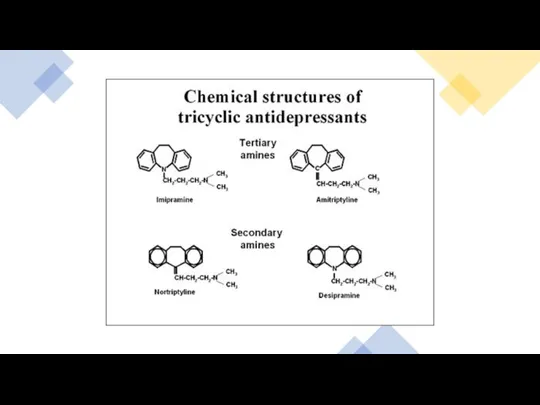
Слайд 9Tricyclic and related antidepressants (TCA)
Amitriptyline (Saroten®)
Clomipramine (Anafranil®)
Dothiepin (a.k.a. dosulepin, Prothiaden®)
Doxepin (Sinequan®)
Imipramine (Tofranil®)
Mianserin
Tricyclic and related antidepressants (TCA)
Amitriptyline (Saroten®)
Clomipramine (Anafranil®)
Dothiepin (a.k.a. dosulepin, Prothiaden®)
Doxepin (Sinequan®)
Imipramine (Tofranil®)
Mianserin
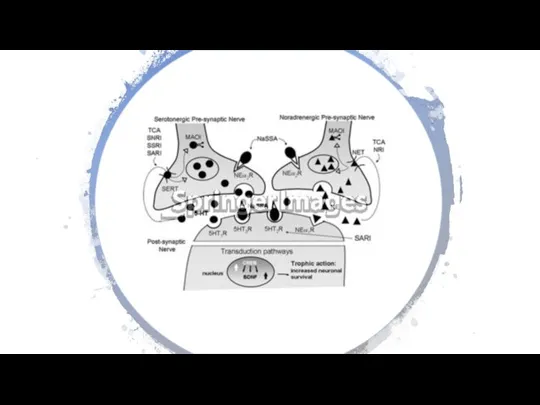
Слайд 12Tricyclic and related antidepressants (TCA)
Mechanism of action
Blocks neuronal uptake both norepinephrine and
Tricyclic and related antidepressants (TCA)
Mechanism of action
Blocks neuronal uptake both norepinephrine and
Слайд 13Antidepressant treatment causes inhibition of serotonin and norepinephrine reuptake or breakdown.
Short-term antidepressant
Antidepressant treatment causes inhibition of serotonin and norepinephrine reuptake or breakdown.
Short-term antidepressant
Слайд 14Antidepressant treatment causes inhibition of serotonin and norepinephrine reuptake or breakdown.
Кратковременное лечение
Antidepressant treatment causes inhibition of serotonin and norepinephrine reuptake or breakdown.
Кратковременное лечение
Слайд 15Down&Up-regulation’s
Normal synapse, no depression
Depression caused by neurotransmitter deficiency
Down&Up-regulation’s
Normal synapse, no depression
Depression caused by neurotransmitter deficiency
Слайд 16As a result of the depletion of neurotransmitters, the receptors increase ('upregulate')
Reuptake
As a result of the depletion of neurotransmitters, the receptors increase ('upregulate')
Reuptake
Слайд 17SSRI blocks the reuptake pump, causing more neurotransmitter to be in the
SSRI blocks the reuptake pump, causing more neurotransmitter to be in the
Слайд 19Tricyclic and related antidepressants (TCA)
Properties
Inexpensive, generic
Some with off-label use, e.g.
Neuropathy with amitriptyline
Refractory
Tricyclic and related antidepressants (TCA)
Properties
Inexpensive, generic
Some with off-label use, e.g.
Neuropathy with amitriptyline
Refractory
Слайд 20Tricyclic and related antidepressants (TCA)
Adverse effects
Orthostatic hypotension
Reduced by moving slowly when assuming
Tricyclic and related antidepressants (TCA)
Adverse effects
Orthostatic hypotension
Reduced by moving slowly when assuming
Слайд 21Tricyclic and related antidepressants (TCA)
Adverse effects
Cardiac toxicity
Arrhythmias and heart block
ECG recommended before
Tricyclic and related antidepressants (TCA)
Adverse effects
Cardiac toxicity
Arrhythmias and heart block
ECG recommended before
Слайд 22Tricyclic and related antidepressants (TCA)
Drug interactions
CNS depressants
Narcotics, benzodiazepines
Additive CNS depression
Anticholinergics
Additive anticholinergic effects
P450
Tricyclic and related antidepressants (TCA)
Drug interactions
CNS depressants
Narcotics, benzodiazepines
Additive CNS depression
Anticholinergics
Additive anticholinergic effects
P450
Слайд 23Monoamine-oxidase inhibitors (MAOI)
Moclobemide (Aurorix®) (RIMAs - Reversible Inhibitors of Monoamine Oxidase)
Phenelzine
Isocarboxazid
Tranylcypromine
Monoamine-oxidase inhibitors (MAOI)
Moclobemide (Aurorix®) (RIMAs - Reversible Inhibitors of Monoamine Oxidase)
Phenelzine
Isocarboxazid
Tranylcypromine
Слайд 24Monoamine-oxidase inhibitors (MAOI)
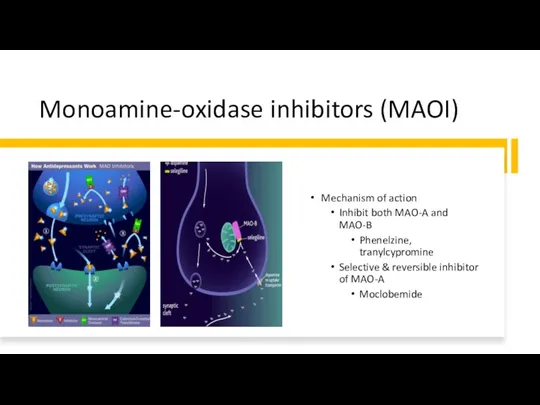
Mechanism of action
Inhibit both MAO-A and MAO-B
Phenelzine, tranylcypromine
Selective &
Monoamine-oxidase inhibitors (MAOI)
Mechanism of action
Inhibit both MAO-A and MAO-B
Phenelzine, tranylcypromine
Selective &
Слайд 25Monoamine-oxidase inhibitors (MAOI)
Properties
Useful in atypical depression (somnolence and weight gain), refractory disorders
Monoamine-oxidase inhibitors (MAOI)
Properties
Useful in atypical depression (somnolence and weight gain), refractory disorders
Слайд 26Monoamine-oxidase inhibitors (MAOI)
Properties
Drug interactions
Other antidepressants should not be started for 2 weeks
Monoamine-oxidase inhibitors (MAOI)
Properties
Drug interactions
Other antidepressants should not be started for 2 weeks
Слайд 27Monoamine-oxidase inhibitors (MAOI)
Adverse effects
Hypertensive crisis
Severe occipital headache, photophobia, palpitation, sharply increased in
Monoamine-oxidase inhibitors (MAOI)
Adverse effects
Hypertensive crisis
Severe occipital headache, photophobia, palpitation, sharply increased in
Слайд 28Monoamine-oxidase inhibitors (MAOI)
Adverse effects
Hypertensive crisis
Severe occipital headache, photophobia, palpitation, sharply increased in
Monoamine-oxidase inhibitors (MAOI)
Adverse effects
Hypertensive crisis
Severe occipital headache, photophobia, palpitation, sharply increased in
Слайд 29Monoamine-oxidase inhibitors (MAOI)
Adverse effects
Orthostatic hypotension
Insomnia
Weight gain
Sexual dysfunction
Monoamine-oxidase inhibitors (MAOI)
Adverse effects
Orthostatic hypotension
Insomnia
Weight gain
Sexual dysfunction
Слайд 30Selective serotonin reuptake inhibitors (SSRI)
Fluoxetine (Prozac®)
Fluvoxamine (Faverin®)
Paroxetine (Seroxat®)
Sertraline (Zoloft®)
Citalopram (Cipram®)
Escitalopram (Lexapro®)
Selective serotonin reuptake inhibitors (SSRI)
Fluoxetine (Prozac®)
Fluvoxamine (Faverin®)
Paroxetine (Seroxat®)
Sertraline (Zoloft®)
Citalopram (Cipram®)
Escitalopram (Lexapro®)
Слайд 31Selective serotonin reuptake inhibitors (SSRI)
Mechanism of action
Inhibits reuptake of serotonin (5-HT -
Selective serotonin reuptake inhibitors (SSRI)
Mechanism of action
Inhibits reuptake of serotonin (5-HT -
Слайд 34Selective serotonin reuptake inhibitors (SSRI)
Properties
Overdose less likely to be fatal
Less anticholinergic side
Selective serotonin reuptake inhibitors (SSRI)
Properties
Overdose less likely to be fatal
Less anticholinergic side
Слайд 35Selective serotonin reuptake inhibitors (SSRI)
Properties
Fluoxetine
Most stimulating SSRI
Indicated for Premenstrual Dysphoric Disorder (PMDD)
Selective serotonin reuptake inhibitors (SSRI)
Properties
Fluoxetine
Most stimulating SSRI
Indicated for Premenstrual Dysphoric Disorder (PMDD)
Слайд 36Selective serotonin reuptake inhibitors (SSRI)
Adverse effects
Headache
GI
Nausea, diarrhoea, loss of appetite
Titrate dose to
Selective serotonin reuptake inhibitors (SSRI)
Adverse effects
Headache
GI
Nausea, diarrhoea, loss of appetite
Titrate dose to
Слайд 37Selective Serotonin Reuptake |Inhibitors (SSRI)
Adverse effects
Somnolence or insomnia
Dose in morning for insomnia
Increase
Selective Serotonin Reuptake |Inhibitors (SSRI)
Adverse effects
Somnolence or insomnia
Dose in morning for insomnia
Increase
Слайд 38Selective Serotonin Reuptake |Inhibitors (SSRI)
Adverse effects
Serotonergic syndrome
Aetiology - SSRI or MAOI +
Selective Serotonin Reuptake |Inhibitors (SSRI)
Adverse effects
Serotonergic syndrome
Aetiology - SSRI or MAOI +
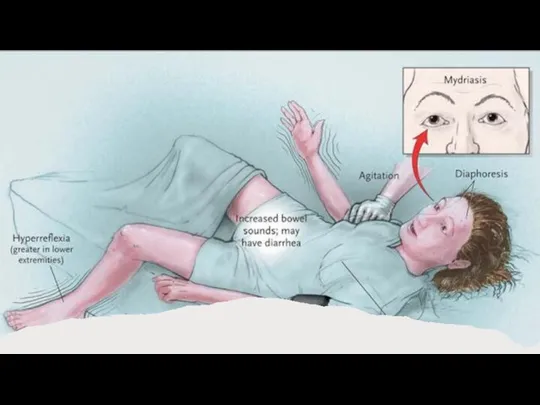
Слайд 40Serotonin Norepinephrine Reuptake Inhibitor (SNRI)
Duloxetine (Cymbalta®)
Venlafaxine (Efexor®, Efexor XR®)
Mechanism of action
Inhibits norepinephrine
Serotonin Norepinephrine Reuptake Inhibitor (SNRI)
Duloxetine (Cymbalta®)
Venlafaxine (Efexor®, Efexor XR®)
Mechanism of action
Inhibits norepinephrine
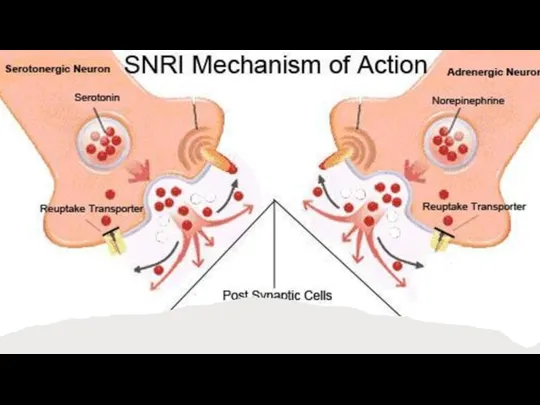
Слайд 42Serotonin Norepinephrine Reuptake Inhibitor (SNRI)
Venlafaxine (Efexor®, Efexor XR®)
Properties and Adverse effects
Also for
Serotonin Norepinephrine Reuptake Inhibitor (SNRI)
Venlafaxine (Efexor®, Efexor XR®)
Properties and Adverse effects
Also for
Слайд 43Serotonin Norepinephrine Reuptake Inhibitor (SNRI)
Duloxetine (Cymbalta®)
Properties and Adverse effects
More potent than venlafaxine?!
Also
Serotonin Norepinephrine Reuptake Inhibitor (SNRI)
Duloxetine (Cymbalta®)
Properties and Adverse effects
More potent than venlafaxine?!
Also
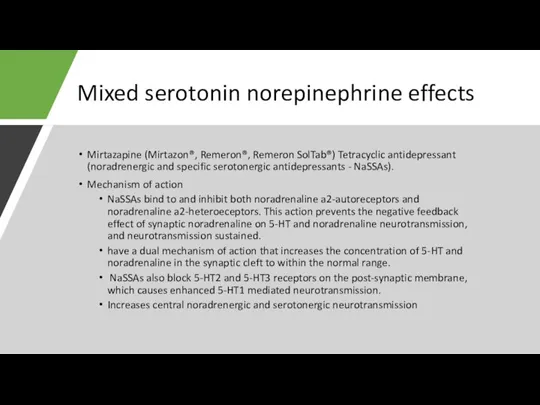
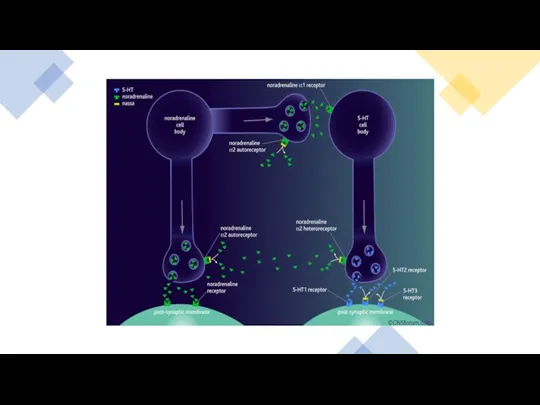
Слайд 44Mixed serotonin norepinephrine effects
Mirtazapine (Mirtazon®, Remeron®, Remeron SolTab®) Tetracyclic antidepressant (noradrenergic and
Mixed serotonin norepinephrine effects
Mirtazapine (Mirtazon®, Remeron®, Remeron SolTab®) Tetracyclic antidepressant (noradrenergic and
Слайд 46Mixed serotonin norepinephrine effects
Mirtazapine (Mirtazon®, Remeron®, Remeron SolTab®)
Properties and Adverse effects
Fewer anticholinergic
Mixed serotonin norepinephrine effects
Mirtazapine (Mirtazon®, Remeron®, Remeron SolTab®)
Properties and Adverse effects
Fewer anticholinergic
Слайд 47Norepinephrine Dopamine Reuptake Inhibitor (NDRI)
Bupropion (Wellbutrin SR®)
Mechanism of action
Inhibits weakly the neuronal
Norepinephrine Dopamine Reuptake Inhibitor (NDRI)
Bupropion (Wellbutrin SR®)
Mechanism of action
Inhibits weakly the neuronal
Слайд 49Norepinephrine Dopamine Reuptake Inhibitor (NDRI)
Bupropion (Wellbutrin SR®)
Properties and side effects
GI side effects,
Norepinephrine Dopamine Reuptake Inhibitor (NDRI)
Bupropion (Wellbutrin SR®)
Properties and side effects
GI side effects,
Слайд 50Other antidepressants
Flupenthixol (Fluanxol®)
Typical antipsychotic
Antidepressant effect at low doses
Antipsychotic dose: 3-9mg twice daily
Antidepressant
Other antidepressants
Flupenthixol (Fluanxol®)
Typical antipsychotic
Antidepressant effect at low doses
Antipsychotic dose: 3-9mg twice daily
Antidepressant
Слайд 51 Trivedi MH et al, Am J Psychiatry. 2006 Jan;163(1):28-40
47% response
Trivedi MH et al, Am J Psychiatry. 2006 Jan;163(1):28-40
47% response
Слайд 52Antidepressants in depression
Choice of agents
All are equally efficacious for depression
Selection based on
Side
Antidepressants in depression
Choice of agents
All are equally efficacious for depression
Selection based on
Side
Слайд 53Antidepressants in depression
Geriatrics
Reduce initial dose by half
Gradual dose titration
Risk of dizziness and
Antidepressants in depression
Geriatrics
Reduce initial dose by half
Gradual dose titration
Risk of dizziness and
Слайд 54Antidepressants in depression
Treatment response
Weeks 1-2
Physical responses
Improvement in appetite and sleep
Weeks 3-4
Energy and
Antidepressants in depression
Treatment response
Weeks 1-2
Physical responses
Improvement in appetite and sleep
Weeks 3-4
Energy and
Слайд 55Antidepressants in depression
Continuation therapy
To prevent relapse
4-9 months after complete remission of symptoms
At
Antidepressants in depression
Continuation therapy
To prevent relapse
4-9 months after complete remission of symptoms
At
Слайд 56Antidepressant Discontinuation
Neuro
Dizziness / confusion
agitation or anxiety,
tremor
sensory disturbances
paraesthesia
electric shock sensations),
sleep
Antidepressant Discontinuation
Neuro
Dizziness / confusion
agitation or anxiety,
tremor
sensory disturbances
paraesthesia
electric shock sensations),
sleep
Слайд 57SSRI side effects
Sexual A. Anorgasmia or delayed orgasm
B. Reduced libido
SSRI side effects
Sexual A. Anorgasmia or delayed orgasm
B. Reduced libido
Слайд 58Pregnancy and TCAs
Pregnancy and TCAs
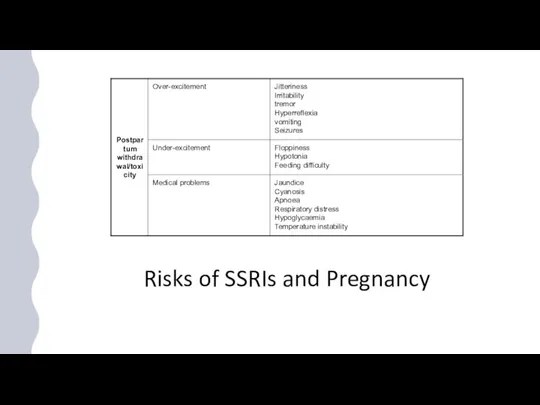
Слайд 59Risks of SSRIs and Pregnancy
Risks of SSRIs and Pregnancy
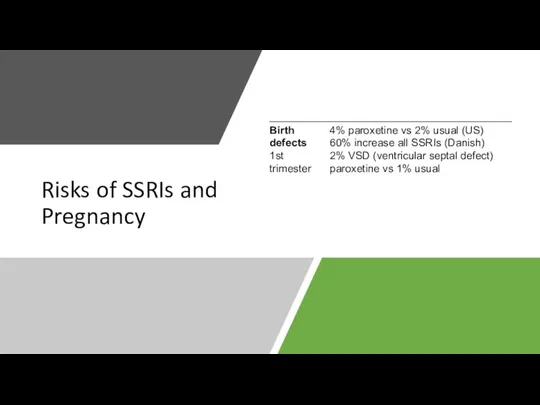
Слайд 60Risks of SSRIs and Pregnancy
Risks of SSRIs and Pregnancy
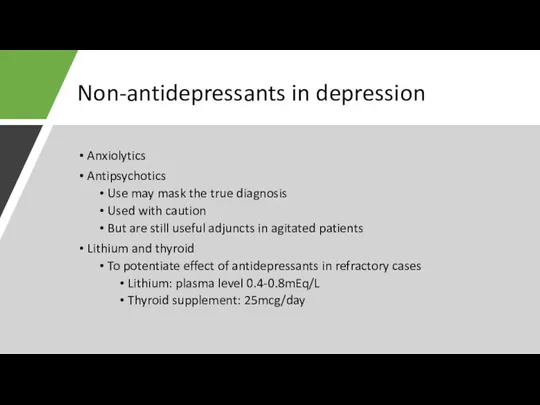
Слайд 61Non-antidepressants in depression
Anxiolytics
Antipsychotics
Use may mask the true diagnosis
Used with caution
But are still
Non-antidepressants in depression
Anxiolytics
Antipsychotics
Use may mask the true diagnosis
Used with caution
But are still
Слайд 62Take away
Есть несколько групп антидепрессантов:
а. отличающихся по химической структуре,
Take away
Есть несколько групп антидепрессантов:
а. отличающихся по химической структуре,
Слайд 63Take away
Все антидепрессанты эффективны одинаков
При назначении антидепрессантов очень важно учитывать и, за
Take away
Все антидепрессанты эффективны одинаков
При назначении антидепрессантов очень важно учитывать и, за
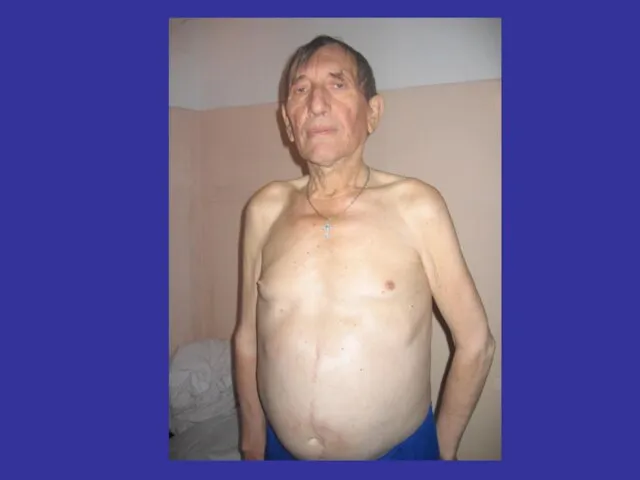 Печёночные знаки картинки
 Приспособительные реакции и компенсация утраченных функций организмов
 Ингаляциялық және ингаляциялық емес препараттар
 Грипп. Признаки и лечение
 Disorder of minerals metabolism. Disorder of calcium metabolism – calcinosis. Formation of stones
 Преимплантационная генетическая диагностика
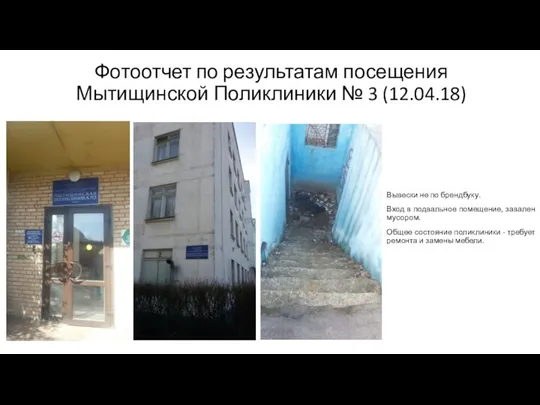 Фотоотчет по результатам посещения Мытищинской поликлиники № 3
 Инфекционные болезни псовых
 О речевом развитии детей. Что должны знать родители
 Здоровый образ жизни. Будьте здоровы
 Симптоматология хронической сердечной недостаточности с разными значениями фракции выброса
 Болезни желудка. Патологическая анатомия
 Композитные пломбировочные материалы
 Черепно-мозговая травма. Протокол действий
 Пути совершенствования внутриаптечного контроля
 Жыныс мүшелерінің гистологиясы
 Вирусные заболевания кожи. Классификация вирусных дерматозов
 Учение о болезни - лекция
 Энцефалатический синдром при инфекционных заболеваниях
 Прокинетики ЖКТ
 Wellness and Spa in Hungary
 Профилактика гриппа и ОРВИ
 Профессиональные заболевания кожи
 Выявление РНК Коронавируса Covid-19
 Психическое заболевание шизофрения
 Исследование гормонального профиля при беременности
 Әр түрлі аурулардағы диетотерапия
 Деменция. По месту поражения