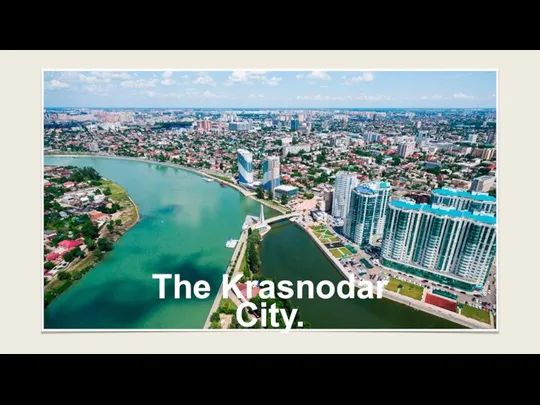
The Krasnodar City
Krasnodar, formerly Yekaterinodar (until 1920), the city originated in 1793 as a military camp, then as a fortress built by the Cossacs to defend imperial borders and to assert Russian dominion over Circassia, a claim which Ottoman Turkey contested. In the first half of the 19th century, Yekaterinodar grew into a busy center of the Kuban Cossacs, gaining official town status in 1867. By 1888 about 45,000 people lived in the city, which had become a vital trade center for southern Russia. During the Russian Civil War (1917-1922) the city changed hands several times, coming successively under the control of the Red Army and of the Volunteer Army. Many Kuban Cossacks, as committed anti-Bolsheviks, supported the White Movement. Lava Kornilov, a White general, captured the city on April 10, 1918, only to be killed a week later when a Bolshevik artillery shell blew up the farmhouse where he had set up his headquarters. During World War II units of the German Army occupied Krasnodar between August 9, 1942, and February 12, 1943. The city sustained heavy damage in the fighting but was rebuilt and renovated after the war. German forces, including Gestapo and "mobile SS execution squads", killed thousands of Jews, Communists, and "supposed Communist 'partisans.'" Shooting, hanging, burning, and even gas vans were used. Yekaterinodar (Krasnodar) 1880s. The oldest part of the city is Krasnodar Historic Center, which consists of many historic buildings, several from the 19th century. Buildings have been preserved, restored or reconstructed, and the district is now a substantial tourist attraction.
 Slaidy.com